
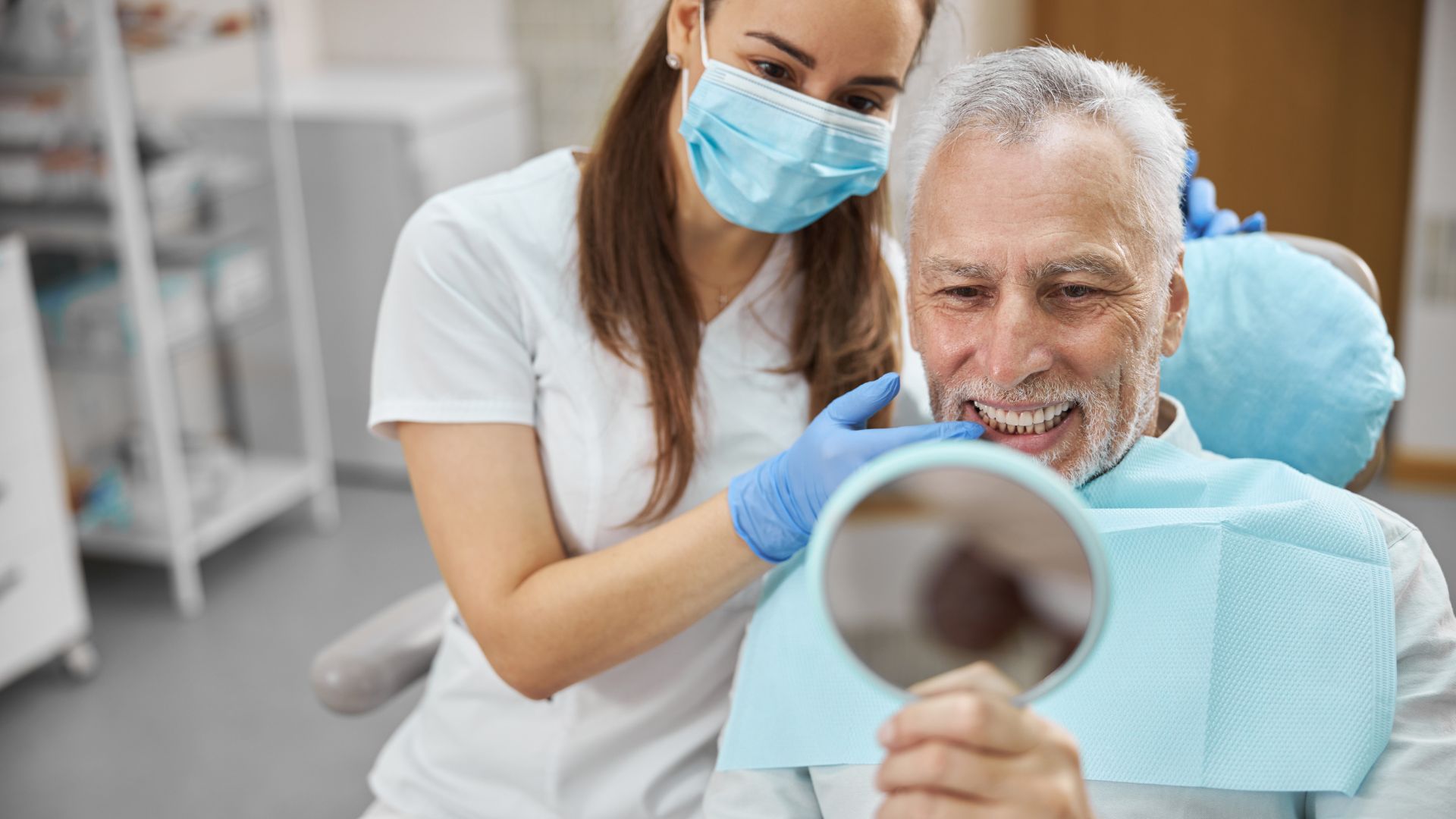
You are missing a tooth, you have read that an implant is the closest thing to getting it back, and the next question is the obvious one. Can you actually have one?
For most people the answer is yes. But an implant is a post placed into your jawbone, placed in a short surgical procedure, so your bone and your overall oral health are the parts of the plan that have to cooperate. This post walks through what Dr. Tummala checks before recommending an implant, what can get in the way, and what can be fixed first.
Dr. Tummala places implants at our office on North Braeswood Boulevard in Meyerland, for patients across Bellaire, Westbury, Willow Meadows and southwest Houston. To find out where you stand, call 713-723-7200 or request an appointment.

Who Is a Good Candidate for Dental Implants?
Most healthy adults with a missing tooth, or a few missing teeth, are good candidates for a dental implant. The checks below are not hurdles designed to rule you out. They are the things that decide whether the implant will still be solid in fifteen years, which is the only standard worth planning to.
Dental implants are the most predictable tooth replacement available, and the evaluation exists to make sure yours behaves that way. These checks also decide the order of work. Quite often the answer is not no. It is not yet, and here is what we do first.
Why Does Jawbone Density Matter for an Implant?
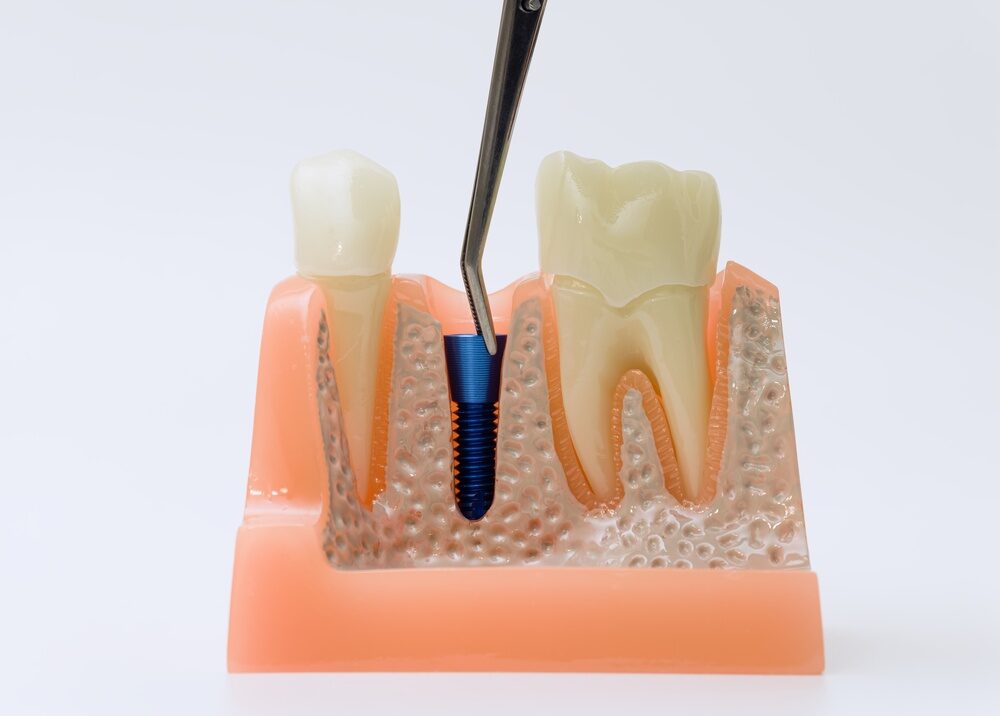
An implant is anchored in bone, so there has to be enough bone there, in the right shape, in the right place.
Here is the part most people are not told. Your jawbone keeps its shape because a tooth root is pressing into it every time you chew. Take the root away and the body starts reclaiming that bone. Most of that loss in bone density happens in the first year after tooth loss.
So timing matters. If you lost a tooth last month, you very likely have the bone you need. If you lost it eight years ago, there may be less to work with. That does not end the conversation. Bone grafting can rebuild the site, and it is a routine part of implant planning rather than a sign something has gone wrong. It does add healing time, which is worth knowing when you are thinking about how long the whole process takes.

Do Your Gums Need to Be Healthy First?
This is the one that surprises people, and it is the most common reason an implant gets postponed.
Active gum disease has to be treated before an implant goes in. The reason is simple. Gum disease is a bacterial infection that destroys the bone holding your teeth. Placing an implant into an infected site invites the same process to happen around the implant, and there is no natural ligament around an implant to slow it down the way there is around a real tooth.
If your gums bleed when you brush, if they have pulled back from your teeth, or if a hygienist has mentioned pocket depths, treat that first. Our laser periodontal disease treatment and deep cleaning pages explain what that involves. Getting your gums stable is not a delay to the implant plan. It is the first step of it.
How Does Your Overall Health Affect Implant Candidacy?
Conditions that change the plan
Uncontrolled diabetes slows healing and raises infection risk, so blood sugar that is well managed matters more than the diagnosis itself. Some medications, particularly certain bone drugs and anything that suppresses the immune system, change how your jaw heals. None of these are automatic disqualifiers. They are reasons Dr. Tummala asks for your full medical history and sometimes talks to your physician before planning treatment.
Smoking
Smoking is the single habit most strongly linked to implants failing. It reduces blood flow to the gums and slows the bone healing that has to happen for the implant to fuse into place. Patients who smoke can still have implants, but the honest conversation includes a higher failure rate and a strong recommendation to stop at least during healing.
Grinding and clenching
Heavy grinding puts force on an implant that it was not designed to absorb. This does not rule you out. It usually means a night guard is part of the plan, which we cover in our post on teeth grinding and night guards.
Age
There is no upper age limit. Healing matters, not the number. The only real age rule is at the other end, because the jaw has to be finished growing, which is usually the late teens.
What Does an Implant Consultation Involve?
Finding out whether you are a candidate for dental implants takes one evaluation, and nothing is decided in it.
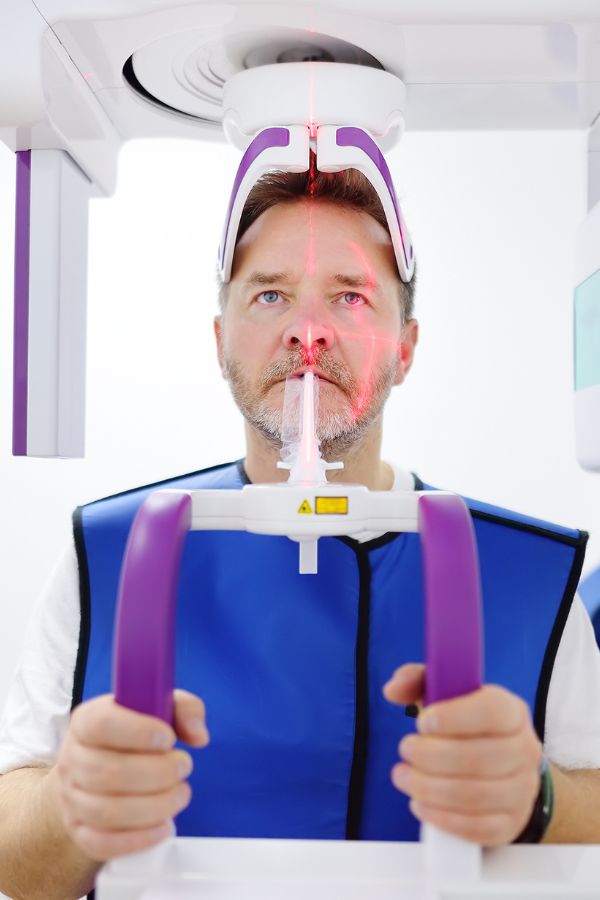
Dr. Tummala examines the gap and the teeth on either side of it, checks your gum health, and takes imaging to see the bone underneath. A three dimensional scan shows bone height, bone width, any bone loss already present, and where the nerve and sinus sit, which a flat X-ray cannot. That oral examination and the imaging together are what the recommendation rests on. Then she talks you through what she found.
If an implant is a good fit, you will hear the sequence and the timeline. If something has to be handled first, you will hear what and why. And if a dental bridge or partial denture is the better answer for your situation, she will tell you that instead. Our page on replacing a missing tooth compares the options side by side.
What Do Dental Implant Surgery and Recovery Look Like?
Knowing the process helps a lot of patients decide, so here is the shape of it.
Implant treatment happens in stages rather than in one appointment. First, a small titanium post is placed into the jawbone where the tooth root used to be. That is a minor oral surgery done under local anesthesia, and most patients describe the recovery as easier than the extraction that preceded it.
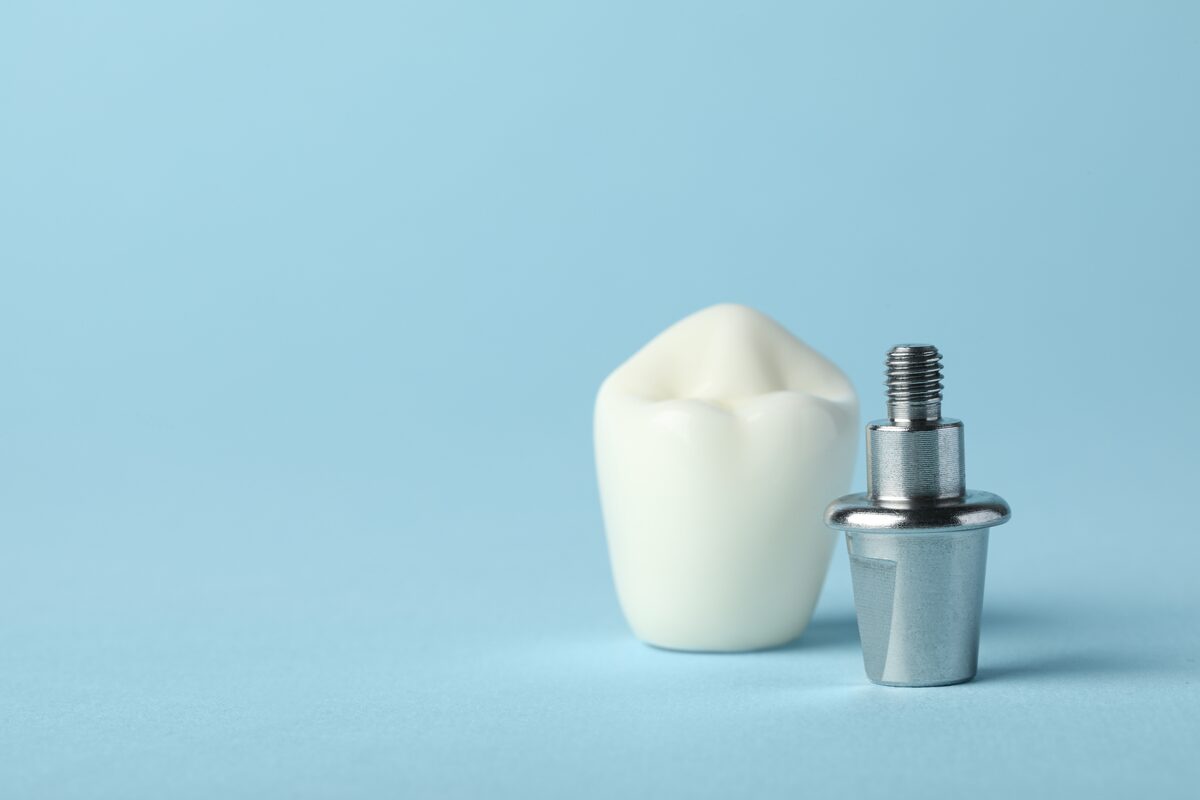
Then the waiting happens. Over the following months the bone grows against the surface of the post and locks it in place, which is the step that makes an implant a permanent tooth replacement rather than something that sits on top of your gums. Once your dentist confirms the post is solid, an abutment is attached and a custom crown is fitted on top. That crown is the part you see and chew with, and it is matched to the shade of the teeth around it.
Caring for the finished implant is ordinary care. You brush and floss around it like a natural tooth and keep your regular checkups so the gum and bone around it stay healthy.
What If You Do Not Qualify Right Now?
Most of the reasons an implant gets delayed are fixable, and the work is worth doing on its own merits.
Gum disease gets treated. A thin ridge gets grafted. Blood sugar gets managed with your physician. A grinding habit gets a guard. Each of these protects the teeth you still have, whatever you end up doing about the gap.
What does not help is waiting without a plan. Bone keeps receding while the gap sits empty, and the teeth on either side slowly drift toward it. If you are going to replace the tooth eventually, the easiest version of that job is the one you start sooner. Our post on single tooth dental implants covers what the finished result looks like.
You do not need to work out whether you are a candidate on your own. That is what the exam is for.
Dr. Tummala sees patients from Meyerland, Bellaire, Westbury, Willow Meadows and across southwest Houston. You can read more about the practice on our Meyerland dentist page.
Call 713-723-7200 or request an appointment and bring your questions.

Frequently Asked Questions
How do I know if I have enough bone for a dental implant?
You cannot tell by looking or by feel. It takes imaging, usually a three dimensional scan that shows the height and width of bone at the site along with where the nerve and sinus sit. That scan is part of the implant consultation, and it is the first thing Dr. Tummala looks at.
Can I get an implant if I have gum disease?
Not while it is active. Gum disease is a bacterial infection that destroys bone, and placing an implant into that environment puts it at risk. The usual path is to treat the gum disease first, confirm the gums are stable, then plan the implant. In most cases this adds weeks to the timeline, not years.
Is there an age limit for dental implants?
There is no upper limit. Healing ability matters far more than age, and many implant patients are in their seventies and eighties. The only firm rule is at the younger end, because the jaw needs to finish growing first, which is usually the late teens.
What if I lost the tooth years ago?
You may still be a candidate. The jawbone shrinks once a tooth root is gone, so there is often less bone than there would have been. A bone graft can rebuild the site. It adds healing time before the implant goes in, but it is routine work and it opens the option back up for most people.
Does smoking mean I cannot have an implant?
No, but it changes the odds. Smoking reduces blood flow to the gums and slows the bone healing that has to happen for the implant to fuse. Implants fail more often in people who smoke. Dr. Tummala will talk through the risk honestly and will recommend stopping at least through the healing period.