

Losing teeth changes ordinary things. What you order at a restaurant, whether you chew on one side, how much you smile in photographs. Dentures are one way to get those things back.
Dr. Chiranjeevi Tummala fits full and partial dentures at Meyerland Family Dentistry on North Braeswood Boulevard, a short drive from Bellaire and Braeswood Place. She will look at what is left, what your gums and bone can support, and tell you honestly whether a denture is the right answer for your mouth or whether something else would serve you better.
Call 713-723-7200 if you would rather talk it through than read about it.
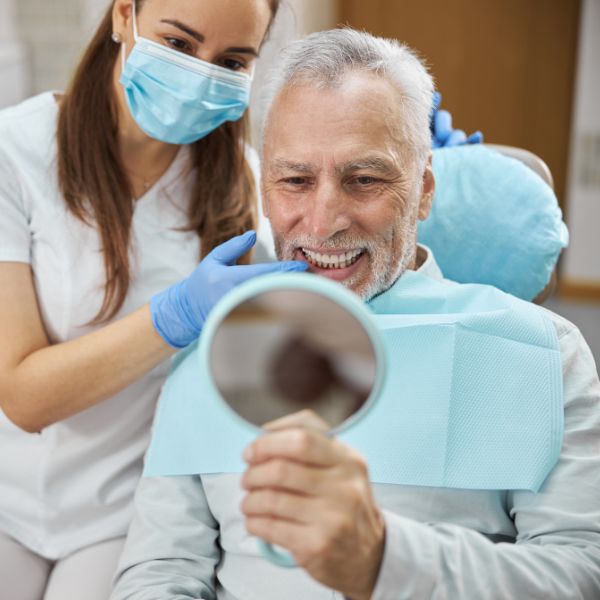
Why a gap is worth filling
A missing tooth is not just a hole. Your bite was built around a full set, and when one tooth goes the forces that used to run through it have to go somewhere else. The teeth either side start taking more load. Over time they can drift, tilt, or loosen.
The bone underneath changes too. Once a tooth is gone the ridge that held it slowly shrinks, which is part of why a denture that fit well years ago can end up loose.
None of this happens quickly, and none of it is a reason to panic. It is a reason not to leave it indefinitely. A consultation is the point at which guesswork stops.
Partial dentures, full dentures, and which one suits you
Partial dentures and full dentures
There are two types of denture, and the choice between them comes down to how many teeth are missing and how strong the remaining ones are.
A partial denture replaces some teeth rather than a whole arch. It rests on the gum and clasps onto your natural teeth to stay put, and it comes out for cleaning. It is the usual answer when you have lost a few teeth in one area and the teeth beside them are healthy enough to hold it.
A full denture replaces every tooth on the top, the bottom, or both. It sits against the gum and is held by suction and the shape of your ridge, sometimes with a denture adhesive.
Which type you need is not really a preference. It is a measurement. Dr. Tummala checks the teeth you still have, the shape of the ridge underneath, and how your jaws meet, then tells you which will give you the most stability.
Two related reads: partial dentures for back teeth, which is the most common partial we fit, and implant-supported dentures, which anchor to implants instead of resting on the gum.
What getting dentures involves
From first examination to finished denture
It is a series of short appointments rather than one long one, spread over a few weeks. Our team will book them in a sequence that works around you.
It starts with an examination and X-rays so Dr. Tummala can see the bone under the gum, not just the teeth above it. If any remaining teeth need to come out first, that happens at the beginning and the gum is given time to settle before impressions are taken. Our page on tooth extractions covers that part.
Then come the impressions. A denture has to match your bite, not a generic one, so this often takes more than one visit. The impressions go to a dental laboratory that builds the denture.
Before the finished denture is made, you try in a trial version so the fit, the bite and the look of the teeth can be checked and changed while changing them is still easy. Say something at that stage if the teeth look too white, too even, or not like yours. That is exactly what the appointment is for.
Once the finished denture goes in, expect at least one follow-up. New dentures almost always need small adjustments, and that is part of the process rather than a sign something went wrong.
The first few weeks, honestly
Eating, speaking and cleaning
Nobody puts in a new denture and forgets it is there. The early weeks take some getting used to, and knowing that in advance makes it easier.
Expect them to feel bulky at first. Expect more saliva than normal for a few days. Eating takes practice, so start with soft food cut small, chew on both sides at once rather than one, and work up. Speaking settles faster than most people expect, and reading out loud at home for a few minutes a day helps more than anything else.
Sore spots in the first couple of weeks are common and they are fixable in minutes. Do not file a denture down yourself and do not push through pain for weeks. Call the office and Dr. Tummala will adjust it.
Clean them every day. Do it over a folded towel or a sink with water in it, because a dropped denture on a hard floor is the most common way they break. Use a soft brush and a cleaner meant for dentures. Keep brushing whatever natural teeth you still have, because a partial denture depends on them.
If you already wear dentures and they have stopped fitting
Plenty of the people we see already have dentures. They are just not working any more.
Usually that is the ridge underneath having changed shape, which it does slowly for years after teeth are removed. A denture that fit at the start gradually stops matching the gum it sits on. You notice it as slipping, as needing more adhesive than you used to, or as sore spots that keep coming back in the same place.
That does not always mean starting over. Sometimes the base can be relined to match the gum as it is now. Sometimes a cracked or worn denture can be repaired. Sometimes it has genuinely reached the end and a remake is the honest answer. Bring the denture in and you will be told which of the three you are looking at.
Dentures, a bridge, or an implant
Dentures are one of three ways to deal with missing teeth, and they are not automatically the right one.
A bridge fills a gap by anchoring to the teeth on either side. It is fixed in place rather than removable, and it needs those neighboring teeth to be strong enough to carry it, which means altering them.
A single dental implant replaces one tooth on its own root, without touching the teeth beside it. It needs enough healthy bone to sit in, and if gum disease is what caused the tooth loss then that has to be treated first.
A denture asks less of the rest of your mouth than either, which is why it is still the answer for a lot of people, including people who are not candidates for the other two. You will get the cost of whichever route you choose in writing before anything begins, along with what it involves. Our financial policy sets out how payment works, and insurance information covers what to check with your own plan first.
Dentures sit alongside the rest of our restorative services. If some of your own teeth are broken down rather than missing, crowns may come into the plan too, and Dr. Tummala will take the whole mouth into account rather than one gap at a time.

Patients we see across Meyerland and southwest Houston
Our office is at 4455 N Braeswood Blvd, Suite 201, in Meyerland, with parking on site. Most of the people we fit dentures for live close by, in Meyerland, Bellaire, Braeswood Place, Westbury and Willow Meadows, across the 77096, 77035 and 77025 ZIP codes.
If you are looking for a practice rather than a specific treatment, our Meyerland and Bellaire pages explain what to expect from a first visit.
Frequently Asked Questions
Can I get a partial denture for just my back teeth?
Yes. A partial denture can replace teeth in one area of the mouth rather than a whole arch, and missing back teeth are one of the most common reasons people get one. It clasps onto the natural teeth still in place and fills the gaps where the molars used to be. Replacing back teeth matters more than people expect, because they do most of your chewing, and without them the front teeth take load they were not built for.
How long does it take to get used to dentures?
Usually a few weeks, and it is a gradual thing rather than a single moment. Early on they can feel bulky and you may produce more saliva than normal. Eating takes practice. Start with soft foods cut small, chew on both sides evenly, and build up. Most people settle in well, but tell us if something rubs, because a sore spot is easy for us to adjust and not something you should push through.
Will dentures change the way I speak?
For a little while, yes. Certain sounds, especially s and f, can feel awkward at first while your tongue learns the new shape. Reading out loud at home for a few minutes a day helps more than anything. It usually sorts itself out within a couple of weeks.
How do I clean my dentures?
Every day, and take them out to do it. Work over a folded towel or a sink with water in it, because dropping a denture on a hard floor is the most common way they crack. Use a brush with soft bristles and a product made for dentures; regular toothpaste is too abrasive and leaves fine scratches that hold stains. Rinse them after meals, and keep them in water or a soaking solution overnight so they do not dry out and warp.
Can I spread the cost of dentures over time?
Yes. Alongside the payment methods we take in the office, we work with CareCredit and Cherry, two patient financing companies that let you pay in installments. You can apply with either before your appointment. The exact terms depend on the plan you qualify for, so we would rather go through the specifics with you than quote numbers here. Call us at 713-723-7200, or see our financial policy for how we handle payment.
Will my dentures need adjusting over time?
Almost certainly. Your gums and jawbone slowly change shape after teeth are removed, so a denture that fit well at first can loosen over the years. That is normal and expected, not a sign anything went wrong. A reline adjusts the fitting surface so it seats properly again. Keep up your regular visits and we can catch a loosening fit before it starts causing sore spots.
Come and find out what your options are
You do not need to have decided anything before you come in. Dr. Tummala will look at what is there, explain what would work, and let you think about it.
Call 713-723-7200 or use the form on our appointment page.