
If it has been longer than you would like since your last cleaning, you are in good company, and it is an easy thing to put right. Meyerland Family Dentistry provides routine teeth cleaning for families across Meyerland, Bellaire and southwest Houston, from our office on N Braeswood Blvd.
The American Dental Association recommends most people have their teeth cleaned every six months. A regular dental cleaning lifts off the hardened deposit that brushing cannot reach, keeps gum disease and decay from getting a foothold, and gives Dr. Tummala a close look at your mouth before a small problem becomes an expensive one. Call 713-723-7200 or request an appointment to get back on schedule.
What Does a Teeth Cleaning Appointment Include?
Each teeth cleaning appointment includes the following processes:
An examination and X-rays
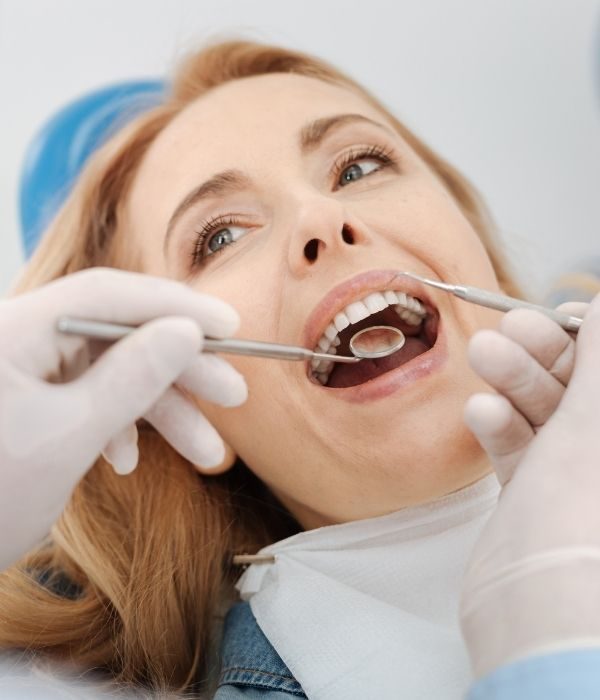
Prior to your cleaning, the dentist or hygienist will give your teeth and mouth a full examination, which may include x-rays to verify that your deeper tooth tissues are in good shape. The goal is to spot any emerging signs of gingivitis, cavities or tooth decay. If any of these issues are detected and the problem is severe, your dental cleaning may need to be delayed until the other issues are managed.
Scaling
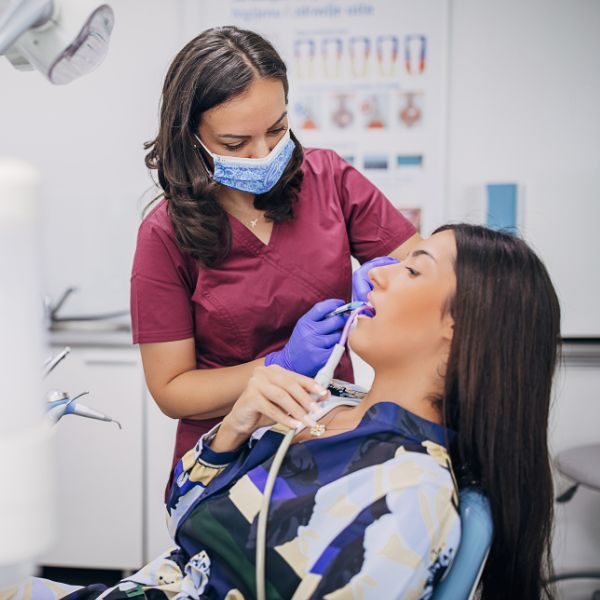
During the scaling process, the dental professional will use a scaler to remove any tartar or plaque from each tooth’s surface. Once calculus hardens on the tooth and converts into tartar, it can only be removed with a scaler. You may feel slight pressure and hear some scraping noises, but the process is pain free.
Polishing
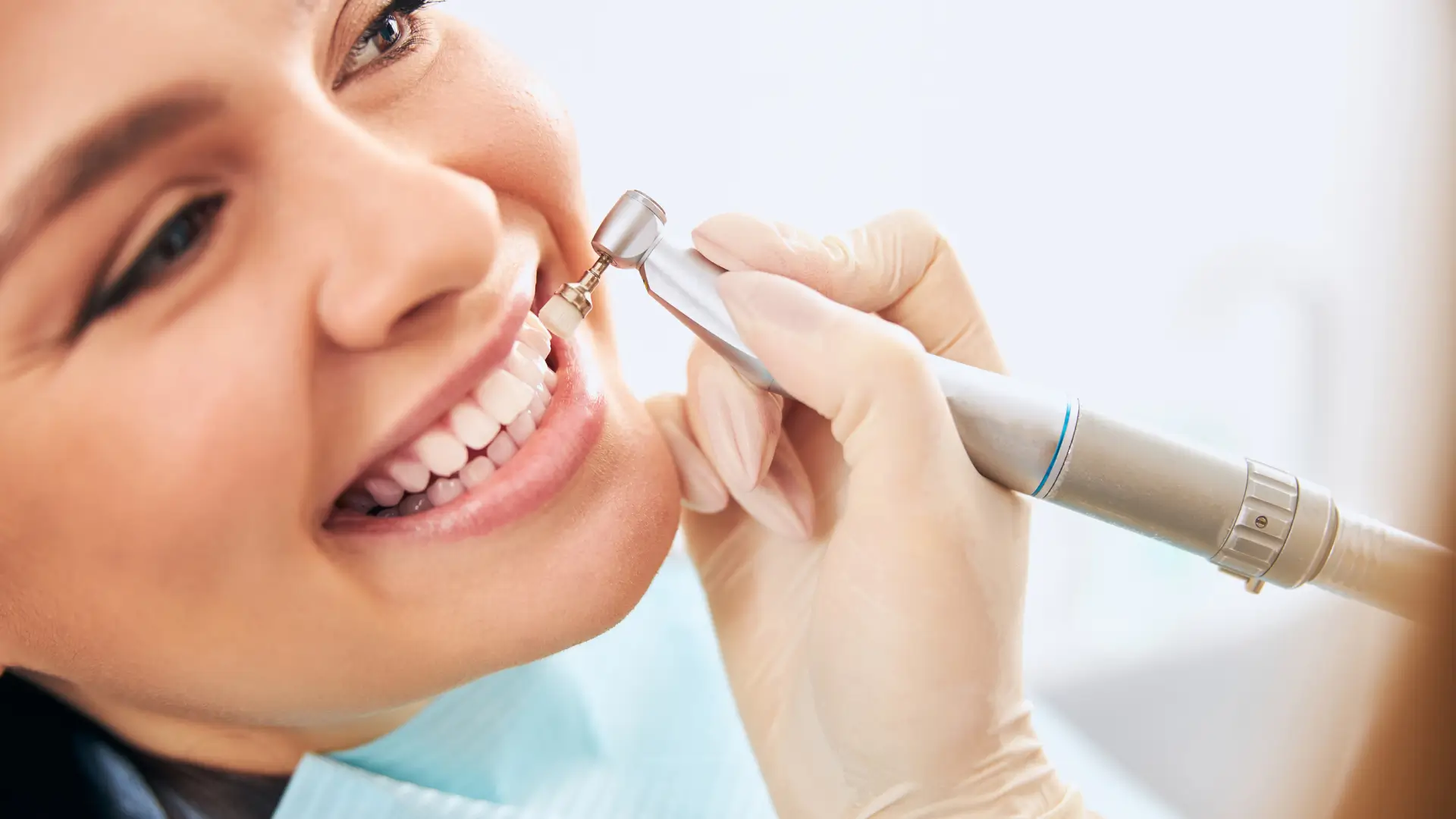
After the teeth are cleaned and scaled and are free of tartar, the hygienist will polish them using a special paste and an implement with a protective rubber cap to ensure this part of the process is gentle on your teeth.
Flossing
Flossing is a vital part of oral hygiene and dental professionals know how to do it thoroughly. During a professional flossing, your dental hygienist will clean every hard-to-reach tooth surface down to the gum line.
Fluoride application
Once the tartar and plaque are gone, the teeth are polished and every tight space has been cleaned out with floss, fluoride may be applied to the teeth.
For some patients we recommend additional services after the cleaning, such as dental sealants to protect the chewing surfaces of the back teeth, which is where decay tends to start in children and teenagers.
What Are the Benefits of Regular Dental Cleanings?
Most people can stay on their oral healthcare schedule with teeth cleanings every six months. However, some people need them more often than that. No matter how often cleanings are recommended, it’s important to stay consistent. Here are the benefits of regular teeth cleanings:
- Reduced risk of gum disease and tooth decay – Gum disease and tooth decay are oral hygiene problems that regular dental cleanings can help prevent. In this way, on-time cleanings are a proven form of oral healthcare.
- Reduced risk of several chronic health conditions – Poor oral health is linked to a number of chronic health conditions, including diabetes and cardiovascular disorders. Oral health is an indicator of overall health, so regular dental cleanings are a way to prevent disease.
- Early detection of any emerging oral health problems – Dental cleanings give your hygienist and dentist a close look at your teeth, gums, tongue, tonsils, the palate, and other oral tissues. If there are any abnormalities or reasons for concern, the issues can be identified and diagnosed.
- Reduced bad breath – Chronic halitosis (bad breath) affects more than 60 million Americans and can be a major confidence problem for many patients. Regular dental cleanings remove the bacteria responsible for causing bad breath and can therefore be used to resolve the issue.
- Healthier smile and improved confidence – Dental cleanings leave your teeth looking and feeling brighter and cleaner, so you’ll feel more confident flashing your smile.
- Lower future dental costs – Dental cleanings are a proven form of preventative oral healthcare and can reduce the impact of age, wear, and even diet. By investing in your oral health with regular teeth cleanings, you are more likely to avoid (or at least delay) more extensive treatments in the future.
Who Should Get Teeth Cleanings More Often Than Every Six Months?
There are a few types of patients who require more frequent teeth cleanings, which include:
- People with gum disease or those recovering from gum disease
- People with a family history of gum disease, tooth decay or other oral health problems
- People who have a weakened immune system
- People who have other chronic conditions that may affect oral health, such as diabetes
If you fall into any of the above categories, your dentist can recommend an ideal teeth cleaning schedule that fits your particular oral healthcare needs.
How a Dental Cleaning Fits Into Your Regular Care
A cleaning is one half of a routine visit. The other half is the examination, where Dr. Tummala checks for early decay, looks at the health of your gums and takes X-rays when there is a reason to. Prevention is the point of pairing the two. A cavity caught while it is still small is a filling. The same cavity left alone for two years is a crown or a root canal, and a much longer afternoon in the chair.
Most patients keep the cleaning and the checkup on one appointment. How often you personally need to come in depends on your gum health and your history, and our post on how often you need a dental checkup in Houston walks through how to work that out.
Where to Book a Dental Cleaning in Southwest Houston
Meyerland Family Dentistry is at 4455 N Braeswood Blvd, Suite 201, Houston, TX 77096, a short drive from Bellaire, Westbury, Willow Meadows and West University Place. There is a practical reason to keep a cleaning local: it is a twice a year appointment, and it is far easier to keep when it sits near home, work or the school run.
Here is what booking one looks like:
- Call 713-723-7200 or request an appointment online. Tell us roughly when your last cleaning was. That one detail decides how much time we set aside for you.
- Plan on about an hour. A routine cleaning with an examination usually fits in that window. If it has been several years, we may need longer or split it across two visits.
- Bring a list of your medications and anything you have been treated for recently. Some of it changes what we look for and how we clean.
- Say so if you are nervous. Plenty of people are, usually because of one bad appointment years ago. Tell us at the start rather than halfway through, and we will work around it.
If you are not sure whether you need a routine cleaning or something deeper, our page on dental prophylaxis explains the difference between the two, and our gum disease treatment page covers what happens when gums are already inflamed. Either way the first step is the same appointment.
Cleanings are one part of the care we provide at our Houston office. If a cleaning turns up something that needs treatment, Dr. Tummala handles it here rather than sending you across town, from tooth fillings and dental crowns to dentures, dental implants and teeth whitening.

Schedule Your Teeth Cleaning in Meyerland
Frequently Asked Questions
It has been years since my last cleaning. Is that a problem?
It is common, and it is not something we will make you feel bad about. People fall out of the habit for all sorts of reasons and a long gap is more usual than you would guess. Practically, a longer gap means more hardened deposit to remove, so the first appointment may take longer or occasionally be split across two. If a lot has built up below the gumline we may recommend a deep cleaning rather than a routine one, and our prophylaxis page explains the difference between the two. We would far rather see you now than have you keep putting it off.
Will the cleaning be uncomfortable?
For most people it is straightforward, more odd than unpleasant. You will feel vibration, some scraping and cold water. It can be more sensitive if your gums are inflamed or roots are exposed, and if it is uncomfortable at any point, say so, because there are things we can do including numbing the area. Nobody should be gritting their teeth through a cleaning.
Will a cleaning make my teeth whiter?
It will make them look cleaner and often noticeably brighter, because removing surface staining from coffee, tea, wine and tobacco reveals the natural shade underneath. That is not the same as whitening though. A cleaning uncovers the color your teeth already are, while whitening changes it. If your teeth are naturally darker than you would like, a cleaning alone will not fix that.
Do I need X-rays every time?
No, and you should not be having them every visit as routine. How often depends on your risk: someone with frequent decay or active gum disease needs them more often than someone with a stable mouth and no recent problems. X-rays show what an examination physically cannot, including decay between teeth and bone levels under the gums. We will explain why we are recommending one when we do.
Are cleanings something I can pay for in installments?
If you would rather spread the cost, we work with CareCredit and Cherry and you can apply with either ahead of your visit. What is available varies from person to person so we do not publish terms, but we will go over the options with you. Our financial policy page explains how payment works.