

A General Dentist for the Whole Family in Southwest Houston
Most dental problems start small. A rough edge, a twinge with something cold, a filling that has been in for twenty years. Seeing a general dentist regularly is how those stay small. Prevention is cheaper than repair, and it is most of what general dental services are for.
Meyerland Family Dentistry is the general dental practice of Dr. Chiranjeevi Tummala, at 4455 N Braeswood Blvd, Suite 201, Houston, TX 77096. She treats children, adults and older patients in one office, so a family does not have to split its dental care across three places. Call 713-723-7200 or request an appointment.
What Does a General Dentist Do?

General dentistry is the everyday oral health care that keeps teeth working: the examinations, the cleanings, and the repairs when something breaks. Dr. Tummala handles all of it at the Meyerland office, for every member of the household. The treatments we provide most often are:
- Dentures, bridges and crowns
- Fillings and sealants
- Dental implants
- Tooth extraction
- Root canal
- Teeth cleaning and examinations
We also provide cosmetic treatments and laser dentistry, including laser treatment for gum disease.
Dentures, Bridges and Crowns Replace the Function of Natural Teeth
Your teeth are designed to work together as a single unit. When some of them are lost to illness or injury, the remaining teeth are placed under additional stress and are more likely to experience damage. Over time, parts of the jawbone are resorbed by the body, and this can affect how your face appears. Dentures, bridges and crowns are cost effective options to replace missing teeth and support remaining teeth. Here’s a quick look at all three:

Dentures
Dentures can be bonded permanently in the mouth, but they are often designed to be removable and can replace a few teeth or all of them. Dentures are precisely machined so that they fit in the patient’s mouth perfectly. This improves comfort and appearance.

Bridges
Bridges can also be removable or placed permanently. They are ideal for replacing a single tooth, as the bridge is bonded to adjacent natural teeth, called abutment teeth. To accommodate the bridge, dentists will first shape the abutment teeth to produce a better fit.

Crowns
Crowns are another option for replacing a single tooth and are indicated when an existing tooth is too damaged or decayed to repair. Over two visits, the dentist will clean out any decay, remove the damaged part of the tooth and place a porcelain crown in its place.
Fillings and Sealants Protect Teeth From Damage and Decay
Dental fillings and sealants are used to either protect teeth from cavities or to prevent them in the first place. Once a cavity emerges, it will gradually compromise the tooth’s integrity and could cause extensive decay if not addressed. To address it, dentists clean out the cavity and fill it with synthetic material. This prevents the cavity from spreading and reinforces the tooth’s structure.
Fillings Repair, Sealants Protect
Dental sealants are applied to a tooth’s chewing surface. They act like a barrier against food and germs, keeping them from getting into your teeth’s grooves and causing a cavity. Applying a sealant is quick, takes no drilling and no numbing, and it is safe for children. Once in place, the sealant will help protect teeth from the majority of cavities for several years.
Not sure what you need yet?
You do not have to know before you call. Tell us what you have noticed and we will book the right length of appointment for it.
Call 713-723-7200 or request an appointment online.
Dental implants are a permanent solution to tooth loss and mimic the look, feel and function of natural teeth better than other replacement options. They include the entire tooth structure, from root to crown, and the implantation process takes place over several weeks. Here’s what the process looks like:

A Titanium Root is Placed in the Jaw
After developing a custom treatment plan, the dentist will prepare the implant area and place a titanium root in your jaw. A temporary implant covers this and will be in place for 2-3 months while the jaw heals.
An Abutment is Attached to the Root
Once the jaw has healed, an abutment is placed on top of the root. The abutment is what attaches the crown to the root and holds it in place.
Dental Impressions are Taken
To ensure optimal fit and appearance, your dentist will take impressions of your teeth. These impressions are used to model your bite and will be referenced when fabricating replacement crowns.

The Crown is Placed
When the replacement crowns have been fabricated, the temporary implant is removed and the final, permanent implant is placed. If taken care of properly, your implant may last for the rest of your life.
If indicated, we can extract teeth that cannot be otherwise repaired. In some cases, extraction is necessary when a tooth is poorly positioned. The extraction process involves a local anesthetic and though you may feel some pressure during treatment, this is normal.
Following extraction, we will review possible replacement options. Losing permanent teeth can result in loss of bone in the jaw, and that can lead to additional complications. Tooth replacement is the most effective way to prevent this from occurring.
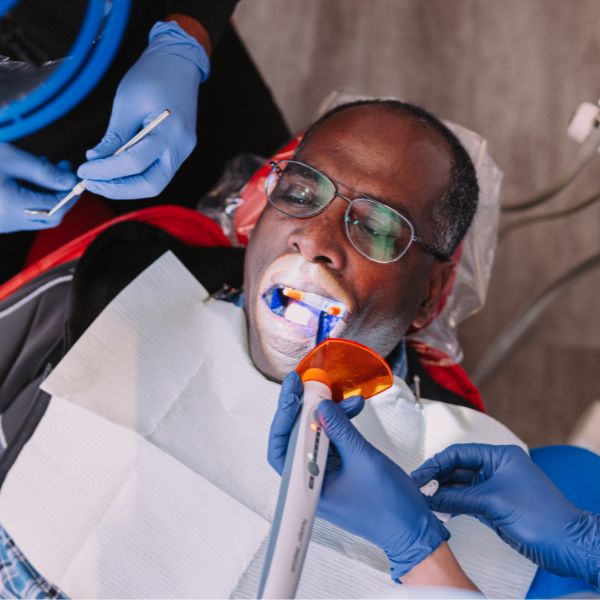
Every year, dentists perform more than 10 million root canals. The process is nonsurgical, and pain can be eliminated with a local anesthetic.
Inside the tooth, a collection of blood vessels called the pulp keep it nourished. If these vessels are infected or damaged, it will cause pain, swelling and leave the tooth vulnerable to further damage. During a root canal, the dentist will access the pulp, clean out any affected or infected tissue and seal the tooth.
What Happens at a General Dentistry Appointment
A routine visit has two halves. Your hygienist cleans the teeth, removing the hardened deposit that brushing at home cannot lift, and will go through your oral hygiene routine with you if anything needs adjusting. Then Dr. Tummala examines the teeth, gums and soft tissue, and takes X-rays when there is a reason to rather than as a matter of routine. X-rays show decay between teeth and bone levels under the gums, which no examination can see on its own.
If she finds something, she will show you what she is looking at and tell you what it involves before anything is booked. Nothing gets started in the same appointment unless you want it to, and a consultation to talk through a larger treatment costs you nothing but the time. Most people come in twice a year, though your own interval depends on your gum health and your history, which our post on how often you need a dental checkup in Houston works through.
If you are a new patient, our first visit page covers what to bring and how long to allow.
One Practice for Children, Adults and Older Patients
Families rarely need the same thing at the same time. A seven year old needs sealants on new molars. A parent needs a cracked filling replaced. A grandparent needs a denture adjusted or a bridge looked at. All three of those happen here.
Keeping everyone at one practice has a practical payoff beyond the shorter drive. Dr. Tummala can see patterns across a family, which matters because decay risk and gum disease both run in households. She also has the whole history in front of her, so a tooth she watched for two years is not a fresh question at the next visit.
For children specifically, our team covers cleanings, sealants, fluoride and monitoring as the adult teeth arrive. Our child dentistry page has more on what to expect at those ages.
Where We See General Dentistry Patients
The office sits on N Braeswood Blvd in Meyerland, which puts most of southwest Houston within a short drive. Patients come to us from 77096, 77035 and 77025, and regularly from further out in Memorial, Alief, Pearland, Pasadena and Fresno.
We have pages written for the neighborhoods we see the most of: Meyerland, Bellaire and West University Place. Westbury and Willow Meadows are both a few minutes away and we see patients from each of them every week.
Better Dental Health Means Better Overall Health
Your dental health affects more than your teeth, gums and mouth. It affects your entire body. Good dental health will defend against infection and will reduce your risk of developing serious disease like diabetes and heart disease.
Fortunately, with basic tooth maintenance that includes regular trips to the dentist, your family’s dental health and accompanying smiles can be kept in perfect condition.

Frequently Asked Questions
What is the difference between a general dentist and a family dentist?
In practice, very little. General dentistry describes the range of treatment, the examinations, cleanings, fillings, crowns, extractions and root canals. Family dentistry usually describes who the practice will see, which is every age rather than one. Dr. Tummala is a general dentist who treats all ages, so both words describe the same office.
Do you take new patients?
Yes. Call 713-723-7200 and we will find you a time. It helps if you can say roughly when your last visit was and whether anything is bothering you now, because that decides how much time to set aside.
How often should I actually come in?
Twice a year suits most people, and that is where we start. If your gums are healthy and your history is quiet, that interval holds. If you have active gum disease, frequent decay, a dry mouth or a condition that affects healing, Dr. Tummala may want to see you more often. She will tell you why rather than just setting the date.
It has been years since I saw a dentist. Is that a problem?
It is more common than you would guess, and nobody here will make you feel bad about it. A long gap usually means more to clean off and sometimes more to repair, so the first appointment may run longer or be split across two. That is the only real consequence of waiting. Putting it off further is what makes it worse.
Can my children and I be seen at the same office?
Yes, that is how most of our families use us. We see children for cleanings, sealants and fluoride, and adults and older patients for everything from a filling to a dental implant. Booking the family together on one visit is usually possible if you ask when you call.
Do you handle a dental emergency?
Call us. A knocked-out tooth, a broken tooth or swelling that is getting worse should be looked at the same day where we can. Our emergency dental care page explains what counts as urgent and what can wait until a normal appointment.
Book a general dentistry appointment in Meyerland
New patients are welcome, and so is anyone who has been away from the dentist longer than they meant to be. Dr. Tummala will look at what is there, tell you what she sees, and go through the options with you.
Call 713-723-7200 or request an appointment online.