


As we age, our teeth are often subject to damage or decay for a number of different reasons, but dental inlays and onlays may be a solution that can help strengthen teeth and enhance their appearance. This procedure can be less invasive than others that are similar in nature, so it often more popular with patients. If you are experiencing damaged teeth or tooth decay, it may be wise to talk with your dentist about inlays and onlays and if they would be right for you.
What Are Inlays and Onlays?
Essentially, inlays and onlays can be used as a method of dental restoration, both in function and cosmetic application.
An inlay is usually done to address tooth decay that resulted in a cavity. An inlay is made up of a custom material that may be created in a laboratory to match a patient’s existing teeth in shape, color and appearance. An inlay is then fitted to the specific grooves of a tooth in a manner that does not extend past the cusps of the tooth.
An onlay is made similarly to an inlay but is generally used to fill larger cavities, so it frequently requires it to extend over the cusps of a tooth.
Both inlays and onlays are made from one of three main materials:
- Ceramic Materials. These materials are favored because they are strong and durable. Add to it that they are stain resistant and can blend in effortlessly with natural teeth with proper color matching, and it is a favorite for dentists and patients alike. It is worth noting that as strong as these materials are, a fracture may still be a possibility if the implements are not well cared for.
- Composite resin. This is primarily used for spaces in which a cavity is too large for a more traditional filling. While this material is designed to match the natural color of a patient’s other teeth, it is not considered to be stain resistant.
- Gold. This material is one of the most durable of the three, reducing the possibility of a fracture and stains, but the downside is that it is more visually noticeable than an inlay or onlay that is customized to match the color of a patient’s existing teeth. This is also not generally as budget friendly as the ceramic or composite resin route.
How Inlays and Onlays Work
While the exact procedure of inlays and onlays can differ based on the patient and their unique circumstances, the process generally follows the below steps:

- Making an appointment.
In this consultation, a dentist will examine the teeth for signs of decay or damage and determine if inlays or onlays will work for the patient.

- Getting a tooth impression.
UIf a filling exists in the affected tooth, it will be removed and the tooth reshaped before an impression is done. The reshaping of the tooth can help the inlay or onlay adhere better to the surface of the tooth. An impression is then generally done.

- Choosing the inlay or overlay material.
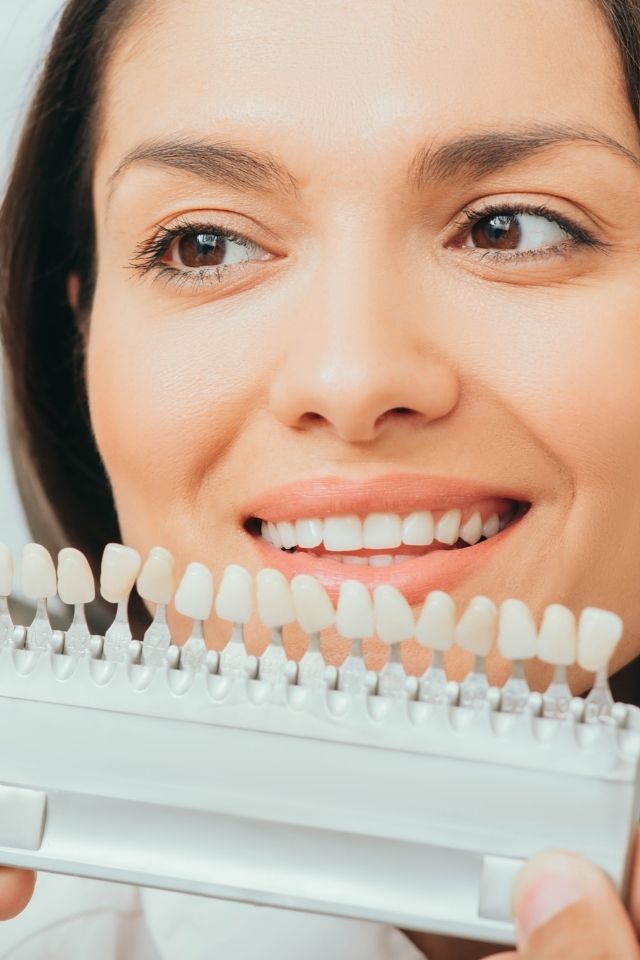
Depending on the results of the impression and the preferences of the dentist and patient, a material is chosen, and when applicable the desired shade of the implement will be chosen so that it more naturally matches that of existing teeth.

- Administering a temporary filling.
Because an exposed tooth that has been prepped for an inlay or onlay can allow for problems to develop, dentists typically put a temporary filling in the space to better seal it in the interim. This helps alleviate tooth sensitivity in the patient.

- Placing the inlays and onlays.
Once the implements are ready, the temporary filling is removed and the new one is put into place. Although it is not required or needed, some dentists will offer patients a local anesthetic to help keep them more comfortable.

How to Take Care of Inlays and Onlays
As with any dental implement that goes in the mouth on a temporary or permanent basis, the ability for it to remain there without issue depends heavily on the oral healthcare practices of the patient. This generally follows basic guidelines such as practicing good dental hygiene on a regular basis, being careful with food or drink consumption that could cause damage or staining, and going to regular dental appointments every six months.
Regular visits to the dentist are critical to maintaining the health of inlays and onlays. Through regular dental checkups, dentists may be able to spot any potential problem areas before they become an issue. Should a problem arise, they will be able to address it quickly.
Benefits of Inlays and Onlays
In addition to a dental patient being able to have inlays and onlays done as a less intrusive procedure than a crown or traditional filling, the process also has several other additional perks including:
- Tailored match to the natural appearance of existing teeth that makes them almost indistinguishable
- Customized fit and shape
- Resistance to stains
- Increased resistance to further damage compared to the more traditional method of fillings
- Improved performance lasting up to decades in some cases

Frequently Asked Questions
What is the difference between an inlay, an onlay and a regular filling?
Size and where they sit. A filling is placed directly into the tooth and hardened in your mouth in one appointment. An inlay is made outside the mouth and then bonded into the hollow between the cusps of a back tooth. An onlay does the same but also covers one or more of the cusps, the raised points on the chewing surface. Think of them as steps on a scale: filling, inlay, onlay, then crown, each covering progressively more of the tooth.
Why would I need one instead of a crown?
Because it keeps more of your own tooth. A crown requires reducing the tooth all the way round. An inlay or onlay only replaces the damaged part and leaves healthy structure alone. When a tooth is too damaged for a straightforward filling but still has sound walls, this is often the better answer. If the tooth is cracked or badly weakened, a crown is the safer choice.
How many appointments does it take?
Usually two. At the first, the damaged area is removed and an impression or scan is taken, and you leave with a temporary. The inlay or onlay is made to fit, then bonded in place at the second visit. We will tell you the timing between the two when we book it.
Will it be noticeable?
Generally not. Tooth-colored materials are matched to the surrounding tooth, and because these sit on the chewing surfaces of back teeth they are rarely visible when you talk or smile at all. Gold is still used occasionally where strength matters most and appearance matters least, and that one is visible, so we would always discuss it with you first.
What are my options if I would rather not pay all at once?
We work with CareCredit and Cherry, two patient financing companies that let the cost be spread into installments, and you can apply with either ahead of your appointment. What is available varies from person to person, so rather than quote terms we will go through the options with you. Our financial policy page sets out how we handle payment.