
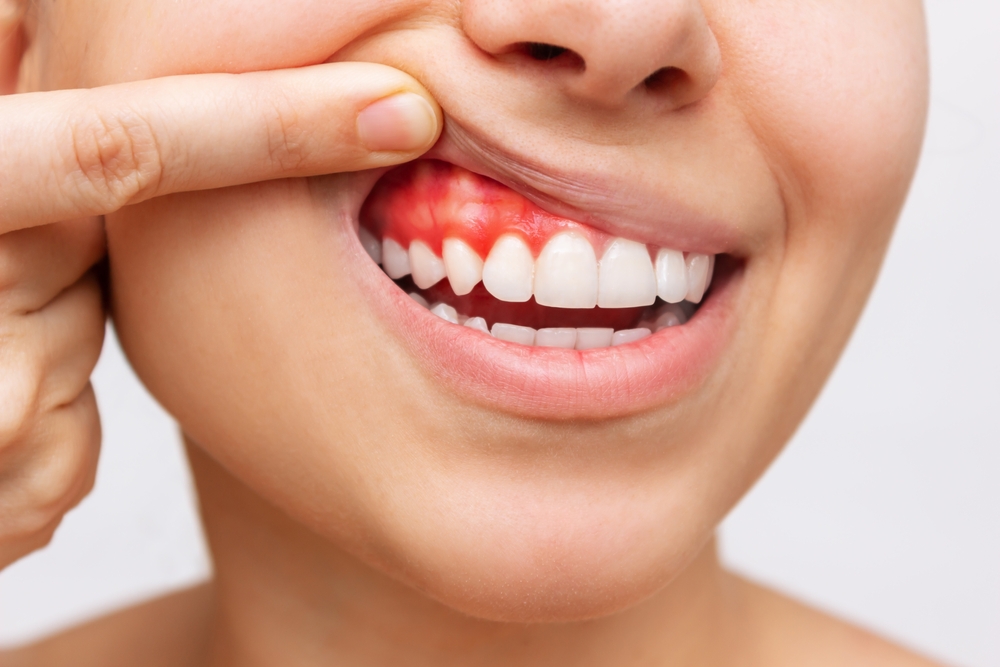
If your gums bleed when you brush, pull away from your teeth, or ache along one side of your mouth, that is gum disease talking. It is the most common reason adults lose teeth, and it is also one of the most treatable problems in dentistry when it is caught early.
At Meyerland Family Dentistry, Dr. Chiranjeevi Tummala treats gum disease with a dental laser at our office on North Braeswood Boulevard, a few minutes from Bellaire and Braeswood Place. The laser lets her clean below the gumline and remove diseased tissue while leaving healthy tissue alone.
This page covers how to tell whether your gums need looking at, what the treatment involves, and what happens afterward. If you would rather just ask someone, call 713-723-7200.
How to tell whether your gums need attention
Gum disease is quiet in the beginning, which is why so many people are surprised to hear they have it. These are the signs worth acting on:
- Blood in the sink or on the floss, even a little, even only sometimes
- Gums that look puffy, shiny or darker red than they used to
- Teeth that look longer, or a gumline that has crept back
- Breath that does not improve after brushing
- A bad taste, or a tooth that feels slightly loose or has moved
- Soreness when you chew on one particular side
Bleeding is the one people ignore most, and it is the one that matters earliest. Our post on when bleeding gums are worth worrying about goes through which symptoms mean it is time to call.
None of this tells you how far along it is. That takes an examination and X-rays, because the damage that decides your treatment happens below the gumline where you cannot see it.
Gingivitis or periodontitis, and why the difference matters
Early gum disease is called gingivitis. The gums are inflamed and they bleed, but the bone holding your teeth is still intact. Gingivitis can usually be turned around with a professional cleaning and a change to how you clean at home.
Once the infection reaches the bone, it is called periodontitis. Pockets open up between the tooth and the gum, bacteria settle into them, and the bone starts to recede. Bone does not grow back on its own. Treatment at that stage is about stopping the loss and keeping the teeth you have, which is where laser treatment comes in.
This is the honest reason to come in early rather than wait. The line between the stage that reverses and the stage that only stabilizes is not something you can feel.
What laser treatment for gum disease involves
The aim is straightforward. Clean the infected pocket out, remove the diseased lining, and give the gum a clean surface to reattach to.
Dr. Tummala starts by measuring the pockets around each tooth and reviewing your X-rays, so you both know which teeth need work and how deep the problem goes. The cleaning itself removes the hardened deposits from the tooth and its root, above and below the gumline. The laser is then used inside the pocket to clear away diseased tissue and bacteria.
Because the laser works on the diseased tissue and not the healthy tissue beside it, she can be more selective than a blade allows. It also seals as it works, so there is usually less bleeding during the appointment than gum surgery involves.
How many visits it takes depends on how many teeth are affected and how deep the pockets are. Some people need one side of the mouth done at a time. Dr. Tummala will tell you the plan for your mouth before anything starts, along with what it costs, and our financial policy explains how payment works.
Comfort, and what the days afterward look like
Most people are more nervous about gum treatment than they need to be, usually because they are picturing being cut and stitched. Laser treatment generally does not need stitches, and many patients find the recovery easier than they expected from traditional gum surgery.
You should still plan for a quiet evening. Tenderness, a little bleeding and some sensitivity for a few days are normal. Dr. Tummala will tell you what is normal for your case and what is not, and what to do if something does not feel right.
If dental anxiety is the reason you have been putting this off, say so when you book. Ask about nitrous oxide or oral sedation and the appointment can be set up for it rather than squeezed in.
Keeping it from coming back
Gum disease is a condition you manage, not a one-time repair. Once the pockets are clean, the job is keeping them that way.
That usually means cleanings more often than twice a year for a while, so the pockets can be measured and anything starting again gets caught quickly. Our periodontal maintenance page explains what that schedule looks like.
At home it comes down to cleaning between the teeth every day, which is where gum disease starts and where a brush does not reach. If flossing has never worked for you, say so. There are other tools, and the one you will actually use is the one worth having.
Smoking and uncontrolled blood sugar both make gum disease harder to control. Bring that up at the appointment. It changes the plan rather than the welcome.


If gum disease has already cost you a tooth
Sometimes a tooth is too loose to keep. When that happens, the gums and bone have to be healthy before anything replaces it, which is another reason treating the gum disease comes first.
Once things are stable, a single dental implant can replace one missing tooth without altering the teeth on either side. Dr. Tummala will tell you whether your gums and bone can support one, and what would need to happen first.
Patients we see across Meyerland and southwest Houston
Our office is at 4455 N Braeswood Blvd, Suite 201, in Meyerland, with parking on site. Most of the patients we treat for gum disease live nearby, in Meyerland, Bellaire, Braeswood Place, Westbury and Willow Meadows, across the 77096, 77035 and 77025 ZIP codes.
If you are choosing a practice rather than booking a specific treatment, our Meyerland and Bellaire pages cover what to expect. If a tooth is painful or your face is swollen, that is not a scheduling question. See emergency dental care or call the office.
Frequently Asked Questions
How do I know if I have gum disease?
The most reliable early sign is bleeding when you brush or floss, even if it is occasional. Puffy gums, a receding gumline, persistent bad breath and a tooth that has shifted are all worth a look. How far it has gone can only be established with an examination and X-rays, because the part that decides your treatment is below the gumline.
Can gum disease be reversed?
Gingivitis, the early stage, usually can be. Once the infection has reached the bone, that bone does not come back on its own, so treatment is about stopping the loss and keeping the teeth you have. That is why the timing of your first appointment matters more than anything else on this page.
How is laser treatment different from a deep cleaning?
A deep cleaning removes hardened deposits from the tooth and root below the gumline. Laser treatment adds a step: clearing diseased tissue and bacteria from inside the pocket itself, while leaving the healthy tissue beside it. Dr. Tummala will tell you which approach your mouth actually needs, and some cases need both.
Does laser gum treatment hurt?
Comfort varies by person and by how much work is needed, so nobody can promise you a particular experience. What we can say is that it generally does not require stitches, and that if you are anxious we would rather plan the visit around that than have you sit through it. Ask about nitrous oxide or oral sedation when you book.
Will it come back after treatment?
It can, which is why gum disease is treated as something you manage over time. Cleanings on a shorter cycle for a while, pockets measured at each visit, and daily cleaning between the teeth are what keep it settled. Smoking and uncontrolled blood sugar make it harder to hold.
Get your gums looked at
If your gums have been bleeding for a while and you have been meaning to deal with it, that is the normal way this goes. Nobody here is going to give you a hard time about how long it has been.
Call 713-723-7200 or use the form on our appointment page and we will find you a time.