
The question almost everyone asks about implants is not what they cost or how they work. It is how long the whole thing takes.
It is a fair question to put to any dentist before you commit to treatment, and a straight answer is easier to give once you know which parts of the process are actually appointments and which are healing.
The honest answer is that it depends on your jaw, and that most of the time is spent waiting rather than being treated. Dental implants are planned around healing rather than around appointments, and implant placement is only one short part of it, which is why the range is wide. A straightforward case often runs three to six months from first appointment to final tooth. A case that needs healing time or bone work can run closer to nine or twelve. Here is where that time actually goes, stage by stage, so you can picture it against your own calendar. Everything below reflects how Dr. Tummala plans a single implant at our Meyerland dental office, for patients coming from Bellaire, Willow Meadows and across southwest Houston.
Stage One: The Assessment
Nothing is placed at the first visit, which is a consultation rather than a procedure. This is the appointment where your dentist works out whether an implant is realistic for you at all. Dr. Tummala examines the site, takes images to see the jawbone underneath, and works out whether there is enough of it to hold an implant securely. She checks your general oral health at the same time, because problems elsewhere in the mouth can change the plan.
What she is looking for
Three things decide whether the plan is simple or long. The height and width of the jawbone where the tooth used to be. The health of the gum around it, because active gum disease has to be treated before an implant goes anywhere near it. And the position of nerves and the sinus, which set how deep and at what angle the implant can sit.
If everything looks good, this stage takes one or two visits with your dentist. If it does not, the extra work happens here rather than later, which is a better place for it.

Stage Two: Anything That Has to Happen First
This is the stage that stretches timelines, and it is the one people do not expect.
If the tooth is still in place
It needs removing first, and that is a step in its own right. The socket then needs time to fill in, usually somewhere around two to three months, though it varies. In some cases the implant can go in at the same appointment as the extraction, which saves that wait entirely. Whether that is possible depends on how much healthy bone is left around the socket.
If there is not enough bone
Bone grafting can build the jaw back up, and the surgery is routine, but it is not quick. Grafted bone needs months to mature before it will hold an implant. A small graft placed alongside the implant placement may add little or nothing to the schedule. A larger bone grafting procedure done on its own can add four to six months before the implant is even placed.
This is why two people with one missing tooth each can be quoted very different timelines. The gap is not the difference. The bone is.
Stage Three: Placing the Implant
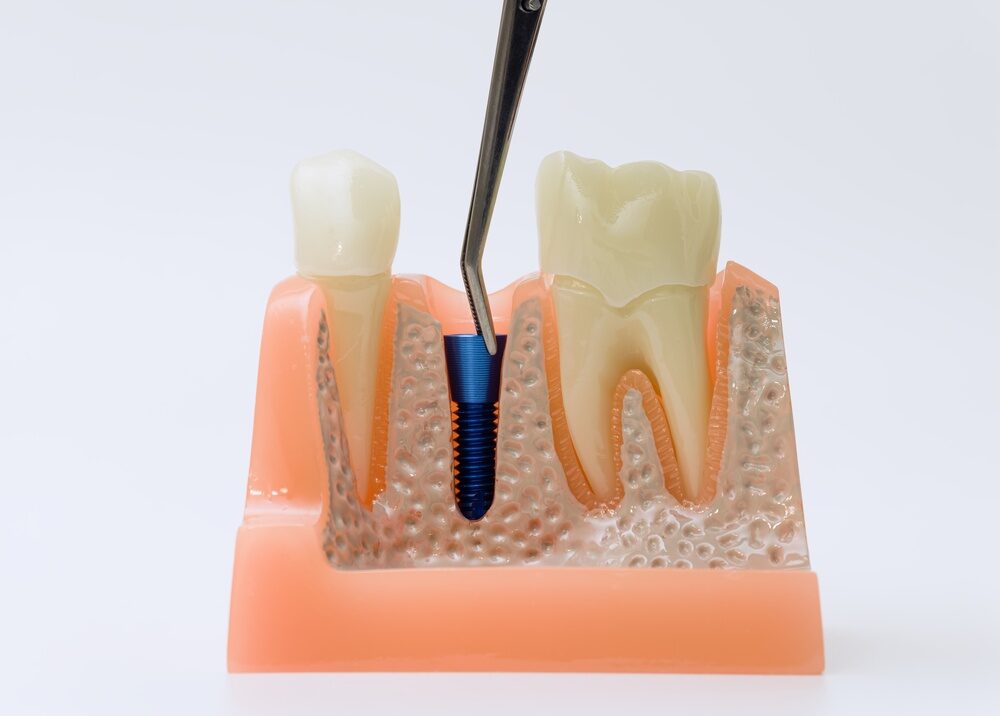
Implant placement is shorter than most people picture. A single implant is often placed in under an hour, under local anesthetic, and many patients are surprised at how ordinary it feels compared to the extraction that preceded it.
The post is a small titanium screw that goes into the jawbone where the root used to be. Placing it is minor oral surgery, done in the office rather than a hospital. Most implants are placed this way. The gum is then closed over or around the post. Soreness for a few days is normal and usually manageable with over the counter pain relievers. Your dentist goes through aftercare with you before you leave.
There is more on what the appointment involves in our guide to replacing one missing tooth.
Stage Four: The Wait That Does the Real Work
This is the longest stage and the one you cannot hurry. The jawbone grows onto the surface of the implant and locks it in place. That process is called osseointegration, and it commonly takes around three to six months.
Implants in the lower jaw often integrate faster than upper jaw ones, because the bone there is denser. Smoking slows this process down measurably, and so does uncontrolled diabetes. None of that means an implant is off the table, but it does mean the timeline is personal rather than standard.
You are not toothless during this period. A temporary tooth is usually fitted so the gap is not visible, particularly at the front.
Stage Five: The Abutment and the Final Tooth
Once the implant has integrated, the restoration can begin. A connector called an abutment is attached to the post first. Sometimes this is placed at the same time as the implant, which removes a step. Sometimes it needs a small separate procedure, and the gum then takes a week or two to settle around it.
Making the crown
An impression or scan is taken and the crown is made to match your other teeth in shape and color. Expect two to four weeks between the impression and fitting. The crown is then fitted, checked against your bite, and adjusted.
That appointment is the end of the process, and the restoration is complete. The tooth is used normally from then on.
How Many Dental Visits Does an Implant Take?
Months on a calendar sound heavier than the treatment feels, because nearly all of that time is spent at home rather than in the chair. A straightforward single implant usually means somewhere between four and six appointments with your dentist.
- The consultation and assessment, with an exam, images and a written plan.
- Implant placement itself, usually under an hour.
- A short check with your dentist a week or two later to see how the site is healing.
- A review once the bone has integrated, to confirm the implant is stable.
- The impression or scan that the crown is made from.
- Fitting the crown and adjusting it against your bite.
Most implants follow those same steps in the same order. Several of them can combine. If the abutment goes on at the same time as the implant, a visit disappears. If the tooth has to come out first, or bone grafting is needed, add the appointment for that and the healing check that follows it.
Between the visits there is nothing to do except let the jawbone do its work, keep up your usual oral hygiene, and come to your regular cleanings. That is why people are often surprised that a nine month timeline took only a few hours out of their year.
So What Is a Realistic Dental Implant Timeline?
For a single tooth with healthy jawbone and no extraction needed, three to six months is a fair expectation. Add an extraction and you are often looking at five to nine. Add significant bone grafting and it can reach twelve. Implants that need groundwork simply take longer, and there is no way around it.
Those are ranges, not promises, and your own case may sit outside them. The useful thing to take away is that the long part is healing, not appointments. Most patients see their dentist a handful of times across those months rather than anything intensive. Patients we treat in Meyerland and southwest Houston are usually surprised by how little of the process happens in the chair.
When Something Else Suits You Better
Implants are not the only answer, and they are not always the right one for every patient. Some patients are better served by a different restoration entirely. If you need a tooth replaced quickly for a specific date, a bridge is faster, usually a few weeks, at the cost of reshaping the teeth on either side.
If several teeth are missing, dentures or implant supported dentures may make more sense than replacing each tooth individually. Dr. Tummala will talk through the options rather than assuming one.
Frequently Asked Questions
Can an implant be placed the same day the tooth comes out?
Sometimes. It is called immediate placement and it can remove two to three months from the timeline. It depends on how much healthy bone surrounds the socket and whether there is any infection present. It is decided at the assessment, not in advance.
Will there be a gap in my smile while I wait?
Usually not. A temporary tooth is normally fitted during the healing period, especially for a tooth that shows when you talk or smile. It is not as strong as the final crown, so you will be asked to avoid biting hard things with it.
Why does my friend's implant take half as long as mine?
The answer is almost always bone. Someone who lost a tooth recently, with good bone and healthy gums, has a much shorter path than someone whose tooth came out years ago and whose bone has since thinned. The visible gap looks the same; what is underneath does not.
Does smoking really change the timeline?
Yes. Smoking reduces blood supply to the healing site, which slows bone growth and raises the chance the implant does not integrate properly. Cutting down or stopping around the treatment period improves the odds. It is worth raising honestly at the assessment so the plan accounts for it.
Ask About Your Own Timeline
The only way to know your real schedule is to have a dentist look at the jawbone. That is what the first consultation is for. If you are considering a dental implant and want to know what it would mean for your calendar, call 713-723-7200 or request a consultation.
Our dental office is at 4455 N Braeswood Blvd #201, Houston, TX 77096 and we see patients from Meyerland, Bellaire, Willow Meadows and across southwest Houston, TX.