
Choosing a new dentist is the easy part. Booking the first appointment is where most people stall, especially if it has been a while since you last sat in a dental chair.
Some of that is nerves about what might be found. Some of it is plain anxiety left over from an appointment years ago. Some of it is simply not knowing what the visit involves, how long it takes, or whether you will be reprimanded, which you will not. This walks through a first visit to a new dentist from the front door onward, so there are fewer surprises and you know what the exam actually covers before you arrive. When you are ready, you can request an appointment or call 713-723-7200.
What to Look for in a New Dentist
Before the appointment there is the choice of where to go, and it is worth more than picking the first result you see.
- Range of treatment under one roof. If a filling, a crown or an extraction means starting again at a new office, the relationship resets every time something needs doing.
- How the first visit is handled. A full oral exam, images and a conversation should come before any treatment plan, not after it. Dentists who quote work before they have looked properly are worth walking away from.
- Whether you can be seen when something goes wrong. A dentist who holds time for urgent problems is worth more than one who cannot fit you in for three weeks.
- How far it is. A practice you can reach on a lunch break is a practice you will actually go back to.
Dr. Tummala is a general dentist, so most of what a set of teeth needs over the years happens in one place rather than across three offices, which keeps your dental care and your records together. That matters less on the first visit than it does on the fifteenth.
Before You Arrive
You will usually be asked to fill in a medical history form. It is worth a few minutes rather than a rushed scribble, because your general health and your oral health are connected, and what is on that form changes how your dentist plans care.
Bring a list of any medication you take, including supplements. Several common medications affect bleeding, healing or dry mouth, and knowing about them in advance is better than finding out halfway through. Raise any other health concerns on the form too, even ones that seem to have nothing to do with your teeth. Two small tips: fill the form in at home if the practice puts it online, and bring your reading glasses if you use them.
What to Bring
A photo ID, your insurance details if you have them, and the medication list. If you have had dental work elsewhere and can get hold of recent x-rays, bring those too. It can save taking new ones.
If a particular thing brought you in, a sore spot, a chipped edge, a tooth that feels different, make a note of it so you remember to raise it with the dentist. Write down any questions while you think of them. It is easy to forget once you are in the chair.
How Long Does a First Dental Visit Take?
Longer than a routine checkup, because there is more to gather. Expect somewhere around an hour in most cases, though it varies with what is found and whether a cleaning happens on the same day. Routine visits and exams after this one are considerably shorter.
If you are on a tight schedule, say so when you book. It is easier to plan around than to discover at the end.
The Conversation Comes First

A good first appointment with a new dentist starts with questions rather than instruments. What brought you in. Whether anything hurts. Any concerns you have been sitting on. What your last experience was like. Whether you are nervous. Those questions are not small talk, and the answers shape the rest of the appointment.
That last one matters more than people expect, and it is worth saying out loud. Dental anxiety is common, and knowing about it changes the pace of an appointment, what gets explained along the way, and how much is attempted in one sitting. Your comfort is part of the plan rather than an afterthought.
The Examination
Dr. Tummala looks at every tooth and the gum around it, checking for decay, cavities starting between teeth, cracks, wear and any restoration that is failing. She also checks the soft tissue, your tongue, cheeks and the floor of your mouth, which is a routine soft tissue check and part of any thorough oral examination.
This is the part most people picture when they imagine a dental exam, and it is quicker than they expect. Your bite gets checked as well. How your teeth meet explains a surprising amount, including worn edges and jaw soreness.

X-rays and Images
X-rays show what an eye cannot: decay between teeth, bone levels under the gum, infection at a root tip. How many X-rays are taken depends on your history and how long it has been.
If you are pregnant or think you might be, say so. It does not necessarily rule imaging out, but it changes what is taken and when.
Gum Measurements
A small probe is used to measure the space between each tooth and the gums. It feels odd rather than painful, and you may hear the dentist or the hygienist calling out numbers as it goes.
Those numbers are the clearest early warning for gum disease, which is common and often has no symptoms until it is advanced. They are also the clearest single measure of gum health you can get in one appointment. Catching it at the measuring stage is the whole point of taking them.
Will I Get a Cleaning on the First Visit?
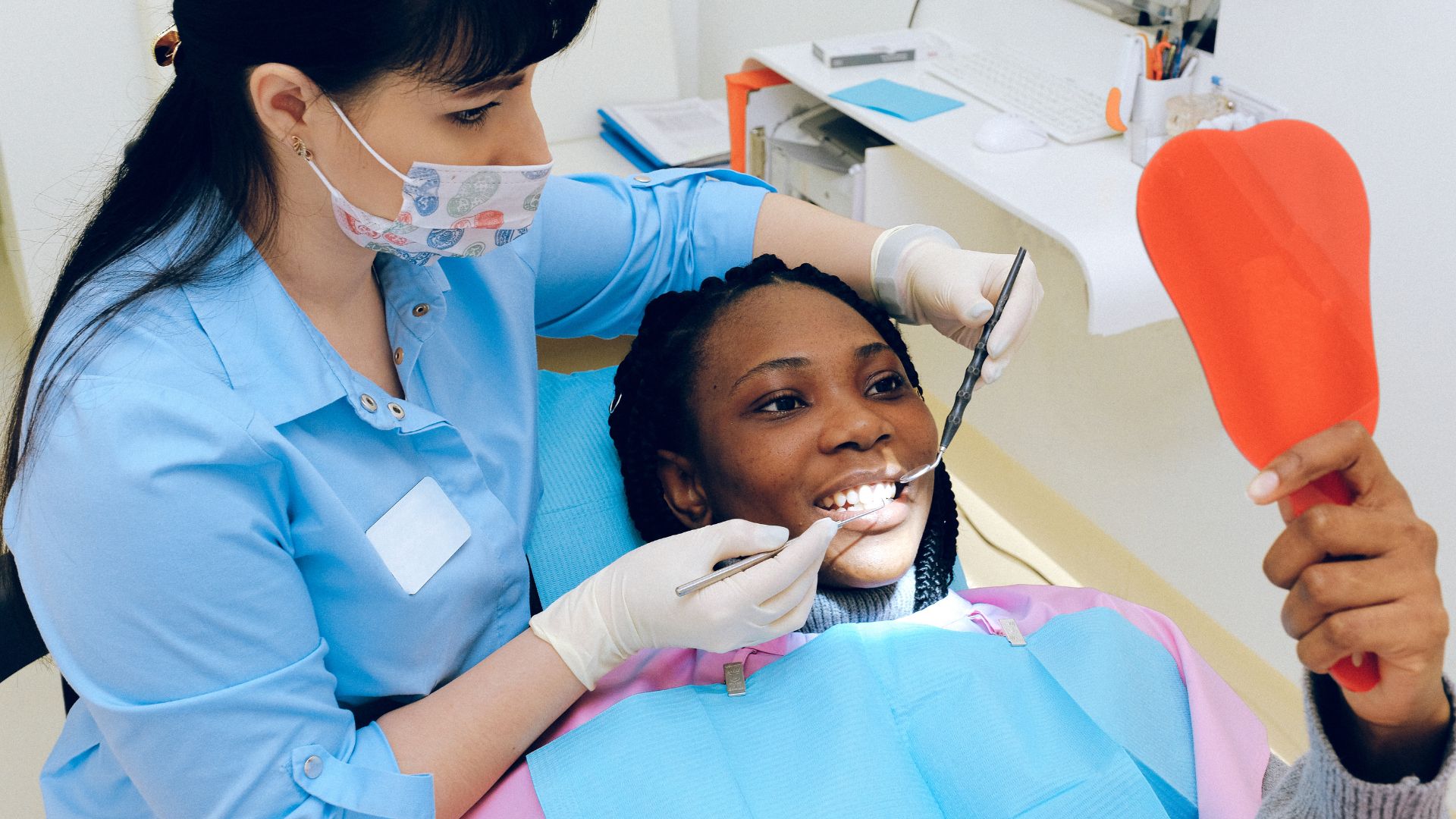
Often, yes. Most first visits include a routine teeth cleaning. Plaque hardens into tartar within days, and once it has, no amount of brushing or flossing at home will lift it off. The hygienist takes it off the tooth surface and from just under the gums, which is where it does the real damage.
Sometimes it is not, and that is not a brush off. If the gum measurements show more than routine inflammation, a standard cleaning is not the right treatment, and a deeper one is scheduled properly rather than squeezed in. You will be told which one you need and why, rather than finding out from the bill.
Getting the Findings
At the end your dentist should tell you what was found in plain terms, what needs doing, what can be watched, and in what order. That is your care plan, and you should leave with a clear version of it. If something does not make sense, ask. Good dentists expect questions and would rather answer them now than have you leave with the wrong idea.
It is reasonable to ask what happens if you do nothing about a particular item. Some issues genuinely can be monitored. Others get more expensive the longer they wait, and knowing which is which helps you decide.
Where there is more than one way to fix something, ask what the options are and what each one involves. A cracked tooth might be a filling now or a crown later, and the choice is usually yours to make once the facts are in front of you.
If You Are Told You Need Work
Try not to read it as a verdict on your brushing. Teeth accumulate history, and some of it is not your doing at all. Old fillings wear out. Grinding cracks enamel. Dry mouth from medication causes cavities in people who have never had one.
Work is usually staged, with anything painful or spreading handled first and the rest planned across later appointments, so the whole list does not have to be dealt with in one go.
If You Have Been Avoiding the Dentist
You are in more company than you think, and a long absence is not unusual. Telling the dentist at the start makes the appointment easier, because it explains the gap and sets the tone. Plenty of patients come back after five or ten years away, and the exam is the same one everybody else gets.
A first visit after several years is often a consultation and assessment only, with treatment planned rather than started. That is a reasonable thing to ask for if it makes the appointment feel manageable.
Bringing Children Along
A family practice sees a wide age range in a single day, and children are usually best introduced early and gently. A first childhood visit is often little more than a look, a count and a ride in the chair, which builds familiarity before anything needs doing.
If you are booking for yourself and for a child, ask whether the appointments can sit back to back. It saves a second trip, and children frequently settle better when they have watched a parent go first.
Children who grind their teeth, breathe through their mouth at night or have crowding worth watching can all be picked up at these visits, long before they turn into issues that need treatment.

Booking the Next Appointment
Before you leave you will usually agree when to come back. Six months is the familiar answer, but it is a default rather than a rule, and some people need more frequent visits while others genuinely need fewer. Your gum health, your history of cavities and how your oral hygiene is going at home all feed into it. We wrote about how often you actually need to go separately.
Finding Us
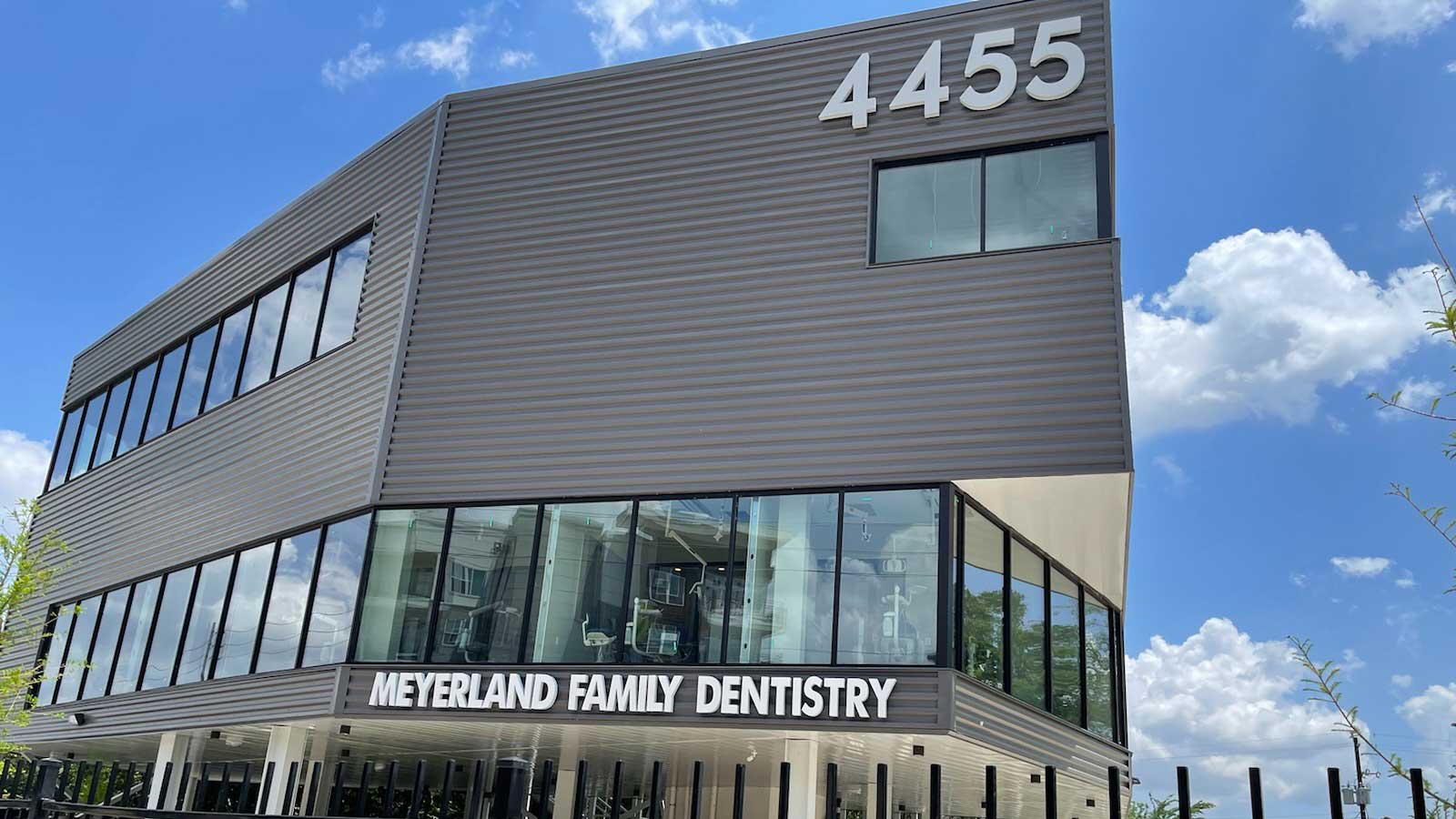
If you are looking for a new dentist in this part of Houston, the office is on North Braeswood Boulevard in Meyerland, convenient for patients across Meyerland, Bellaire, Westbury and Willow Meadows. Directions and details are on our contact page.
Frequently Asked Questions
I am embarrassed about the state of my teeth. Will I be judged?
No. Dental teams see every situation, including mouths that have been avoided for a decade, and the useful response is a plan rather than a lecture. Saying you feel embarrassed at the start usually makes the visit easier, not harder.
Can I bring someone with me?
Yes. Many people find it easier with someone in the room, and there is nothing unusual about asking. Mention it when you book so the appointment is set up for it.
What if something hurts during the appointment?
Say so, or raise a hand. Nothing in a first examination should be painful, and if a spot is tender that is useful information rather than an interruption.
Do I need x-rays if I feel fine?
Feeling fine does not rule much out, because decay between teeth and bone loss under the gum are both silent for a long time. How many images are taken depends on your history, and Dr. Tummala will explain what she is looking for.
How soon will I know what treatment costs?
You should leave with a clear idea of what is recommended and in what order, and the front desk can go through the figures with you before anything is scheduled. Ask for it in writing if that helps you decide at home.
Make the First Appointment
If you have been putting it off, the visit is almost always less than you have built it up to be, and it is a step toward a healthier mouth and a smile you are not hiding, rather than a telling off. Call 713-723-7200 or schedule your appointment, and you can read a little about Dr. Tummala, the dentist who will be seeing you, before you come in.