
Almost every adult who asks about straightening their teeth asks the same question within the first minute. Aligners or braces?
It is a fair question and it does not have one answer. The two treatments move teeth the same way, using steady gentle pressure over months. What differs is how that pressure is delivered, what it asks of you day to day, and which kinds of movement each one handles well. This page lays out both honestly, including the cases where fixed braces are simply the better option.
How the Two Treatments Actually Differ
Traditional fixed braces are small metal brackets bonded to the front of your teeth, joined by a wire. The wire is the engine. Your dentist adjusts it at intervals, and because it is attached to the teeth it works every hour of every day whether you think about it or not.
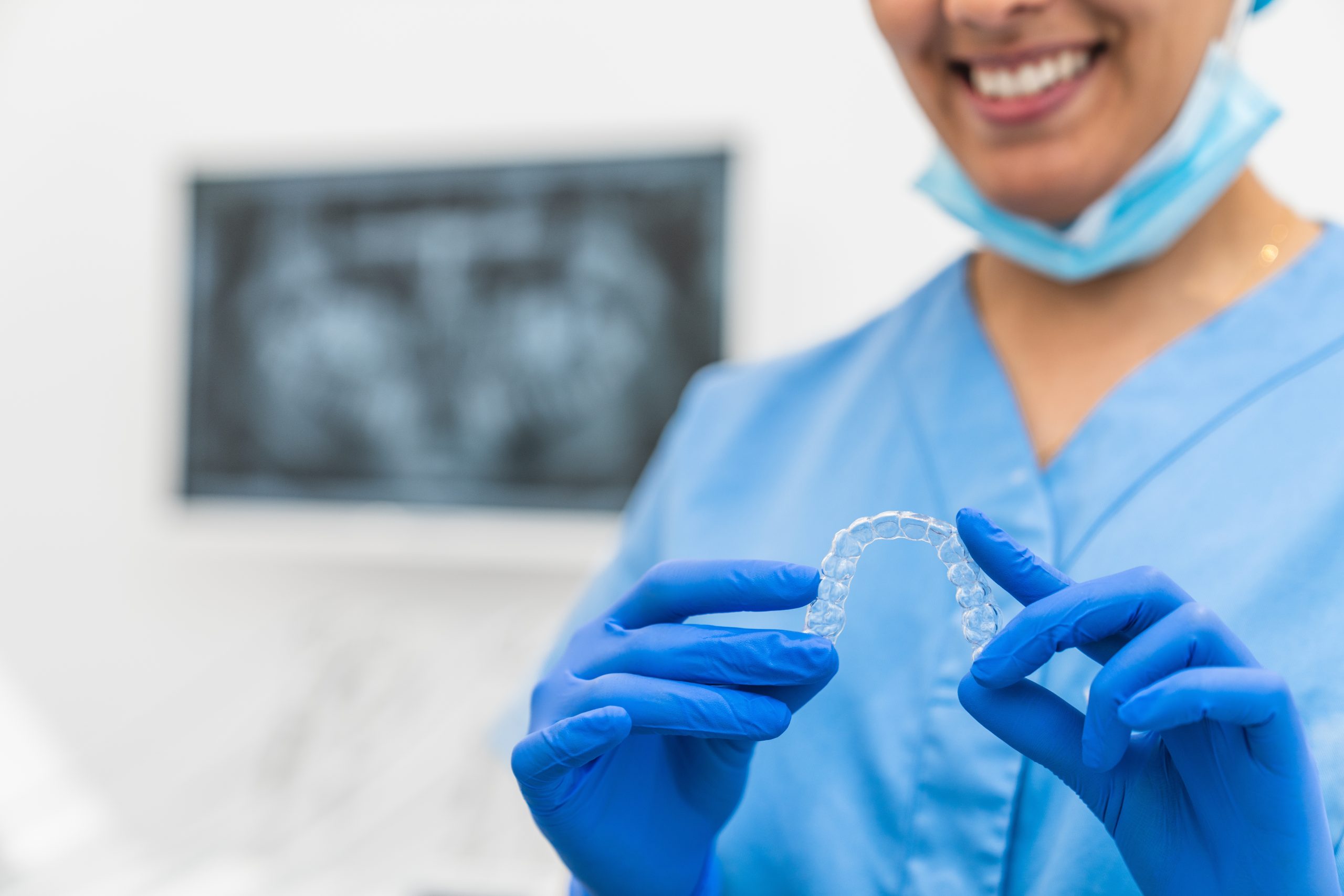
Clear aligners are a series of thin removable trays. Each tray is shaped slightly differently from the one before it, so wearing them in order gradually moves your teeth along a planned path. You take them out to eat, brush and floss, then put them back.

What Each One Handles Well
The two are not equal, and it is worth being plain about that. Clear aligners do their best work on mild to moderate crowding, spacing and the relapse that shows up years after childhood braces. Traditional metal braces handle the harder end: teeth that need rotating, roots that need moving bodily rather than tipping, large gaps to close, and bites that are genuinely off rather than just crooked.
Most adults asking about straightening fall in the first group, which is why aligners come up so often. Some do not, and hearing that at the consultation is a great deal more useful than finding it out nine months in.

The Case for Aligners
For most adults with mild to moderate crowding, spacing or relapse after childhood braces, aligners do the job and fit into an adult life more easily.

Nobody Has to Notice
This is the reason most adults ask about them. The trays are thin and clear, close enough to invisible at conversational distance. Across a meeting or a dinner table people generally do not notice them, and your appearance in photographs does not change for the months the treatment runs.
You Can Take Them Out
There is no food you have to give up with clear aligners because you remove the tray to eat. Brushing and flossing carry on exactly as they do now, which matters more than it sounds. Cleaning around brackets and wires is genuinely harder, and patients in fixed braces have to work at keeping gums healthy for the duration of the treatment.
Removability is also the catch. An aligner only moves a tooth while it is in your mouth. The usual instruction is twenty two hours a day, which means the trays are out for meals and oral hygiene and little else. Patients who treat that as a suggestion end up in treatment considerably longer than planned.
The Case for Braces
Traditional braces have been the answer for a century for good reason. There are movements a bracket and wire achieve more predictably than a tray, particularly rotating a round tooth, moving a tooth bodily rather than tipping it, and closing a large gap. If your bite needs that kind of work, a tray is the wrong tool and we will say so rather than sell you the treatment you came in asking about. The results are what you live with afterward, not the appliance that produced them.
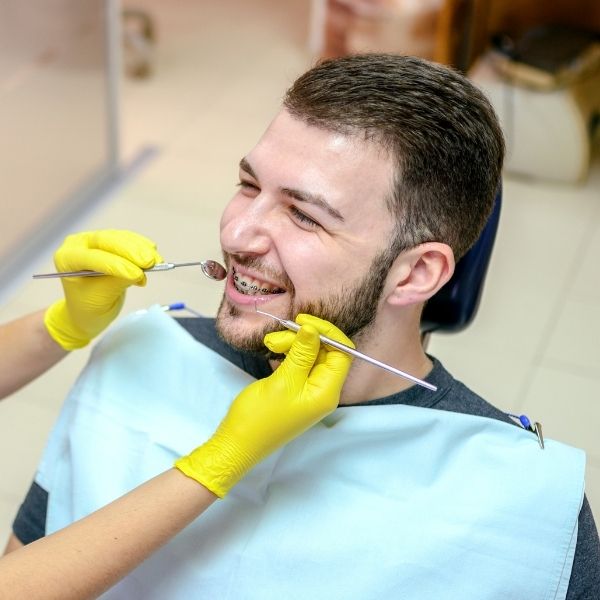
Braces also remove the compliance question entirely. For a teenager, or for an adult who knows they will not keep to twenty two hours, a fixed appliance quietly removes a variable that otherwise decides the outcome.
Which One Is More Comfortable?
Neither is as bad as people expect, and both are felt. With aligners each new tray is tight for a day or so and the teeth ache when you bite down. That settles, then repeats mildly with the tray after it. There is no metal against the inside of the lip, so nothing rubs.
Braces run the opposite pattern. The first week is the sore one, and there is an ache for a few days after each adjustment. Brackets can catch the lip until the mouth toughens to them, which wax deals with in the meantime. Tell us if the pain is more than that, because it usually means something needs adjusting rather than enduring.
For most people comfort is a real factor but not the one that decides it. The bigger daily difference is that aligners come out for meals and for brushing, and braces do not.
What Decides It in Practice
Four things, in roughly this order. How far your teeth actually have to travel. What kind of movement that needs. Whether your gums are healthy enough to start. And how you honestly expect to live with the treatment and the daily care it asks of you.
The third one is particularly important as moving teeth through inflamed gum and bone is not safe, so if there is active gum disease, it gets treated first. That is a real and common sequence, not a delay tactic, and our laser gum disease treatment is often the first appointment rather than the last.

What the Months Actually Look Like
With aligners you change trays on a schedule we set, usually every week or two, and come in occasionally so we can check the teeth are where the plan said they would be. Most of the treatment happens without you sitting in a chair, which is the part adults with full calendars tend to appreciate.
With braces the rhythm is the opposite. The appliance works on its own, and you come in at intervals for the wire to be adjusted. Those visits are short, but they are not optional, and a missed appointment stalls progress until it is rescheduled.
What Happens at the Consultation?
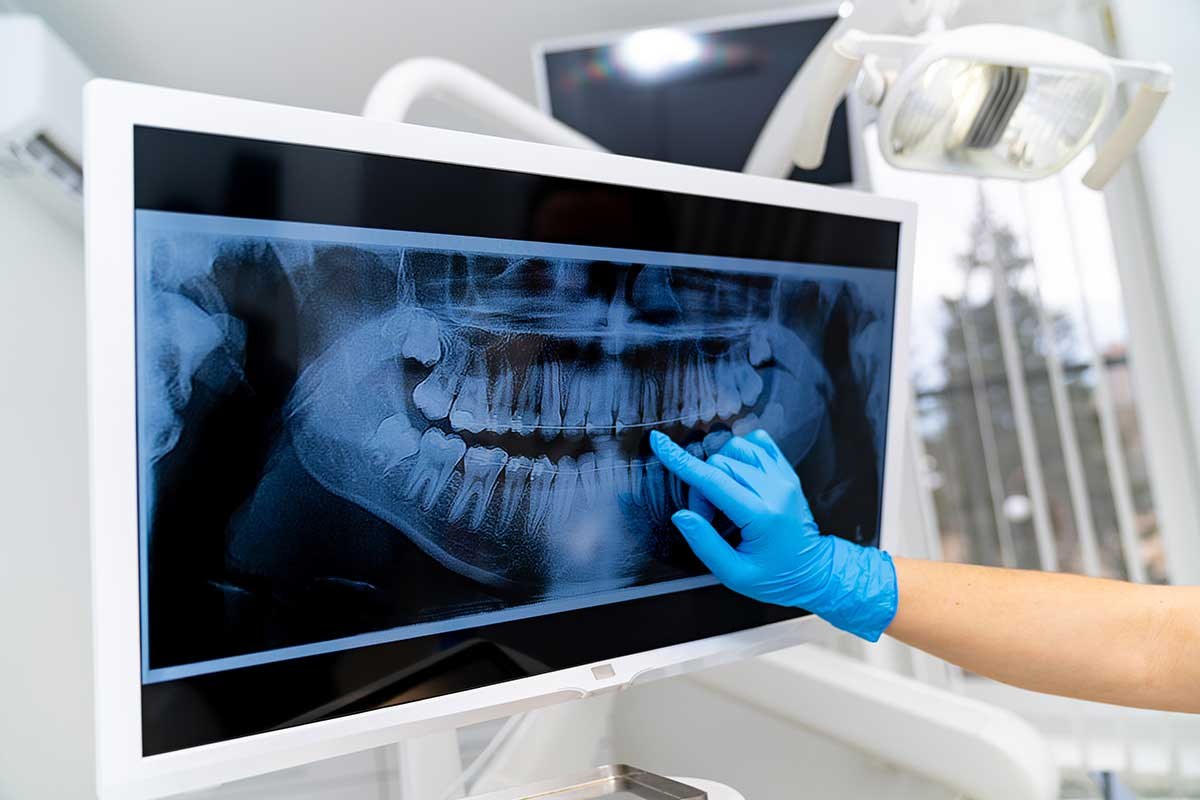
We look, we take X-rays and a scan, and we tell you which of the two options we think fits your case and why. If both would work we will say that too, and the choice is then yours to make on lifestyle rather than on clinical grounds.
We also check the things that have to be right before any tooth is moved. Old fillings and crowns get looked at, because a crown does not respond to an aligner the way a natural tooth does. Any decay is treated first. If a tooth is missing, where the gap should end up becomes part of the plan rather than something to solve afterwards, and that can involve a dental implant later in the sequence.
You get a written plan before anything starts. We do not quote treatment costs on a web page, because the number depends on how much movement your teeth need, and a figure typed here would be a guess about your mouth.
What Decides the Cost
We do not publish figures, but you should understand what moves them. Three things mostly: how far your teeth have to travel, how long the treatment runs, and whether anything has to be dealt with first. A case that needs six months of small corrections is not the same job as one that needs two years, and the cost follows the work rather than the appliance you choose.
Gum treatment or a filling needed before we start is its own line rather than a surprise added later, and the retainer at the end is part of the plan from the beginning. Your written plan sets out the whole sequence before you agree to any of it.
A Word on Comparison Shopping
Plenty of adults arrive having already read a lot online, and much of what is written about straightening teeth is written by companies selling one specific product. The useful questions to ask anyone are the same three: what movement does my bite actually need, what happens if I stop partway through, and who is responsible if a tooth does not track as planned? You should get a straight answer to all three before you commit, here or anywhere else.
Both Treatments End the Same Way
Whichever route you take, teeth try to drift back toward where they started. That is not a failure of the treatment, it is simply how the fibers around a tooth behave. A retainer is what holds the result, and it is part of the plan from the beginning rather than an afterthought at the end.

Frequently Asked Questions
Can I switch from aligners to braces partway through?
Yes, and it occasionally happens. If a tooth is not tracking the way the plan expected, moving to a fixed appliance for part of the treatment is a normal adjustment rather than a setback.
Do aligners hurt?
Each new tray feels tight for the first day or so, and teeth can feel tender when you bite, but settles. Braces feel similar for a few days after an adjustment. Neither should be more than uncomfortable, and tell us if yours is.
Which one is faster?
It depends entirely on the movement needed, not on the appliance. Straightforward cases often finish sooner in aligners because there are no adjustment visits to schedule. Complex bites are usually quicker in braces.
I had braces as a teenager and my teeth moved back. What now?
That is one of the most common reasons adults come in, and it is usually a smaller job than the original treatment. Relapse cases are often well suited to aligners.
Do you treat children and teenagers as well?
Yes. The right approach for a younger patient depends on how much growth is still to come, which is something an X-ray shows clearly.
Talk It Through in Meyerland
If you have been wondering about clear aligners vs. braces for a while, an examination answers it properly in one visit, with a straight view of what your smile actually needs. We see patients from across Meyerland and Bellaire. Call 713-723-7200 or request an appointment.