

One tooth is gone. The gap is not huge, it does not hurt, and you could probably live with it. But you have been told to fill it, and the two words that keep coming up are bridge and implant.
They are very different answers to the same problem. A bridge borrows strength from the teeth on either side of the gap. An implant builds a new root in the bone where the old one used to be. Both give you a tooth you can chew on. What they ask of your mouth, and how long they hold up, are not the same.
This post walks through how each one works, what each one costs you in healthy tooth structure, and the questions Dr. Tummala asks before she recommends one over the other. If you would rather talk it through in person, call 713-723-7200 or request an appointment at our office on North Braeswood Boulevard.
What Is the Real Difference Between a Bridge and an Implant?
Think about what is holding the new tooth up.
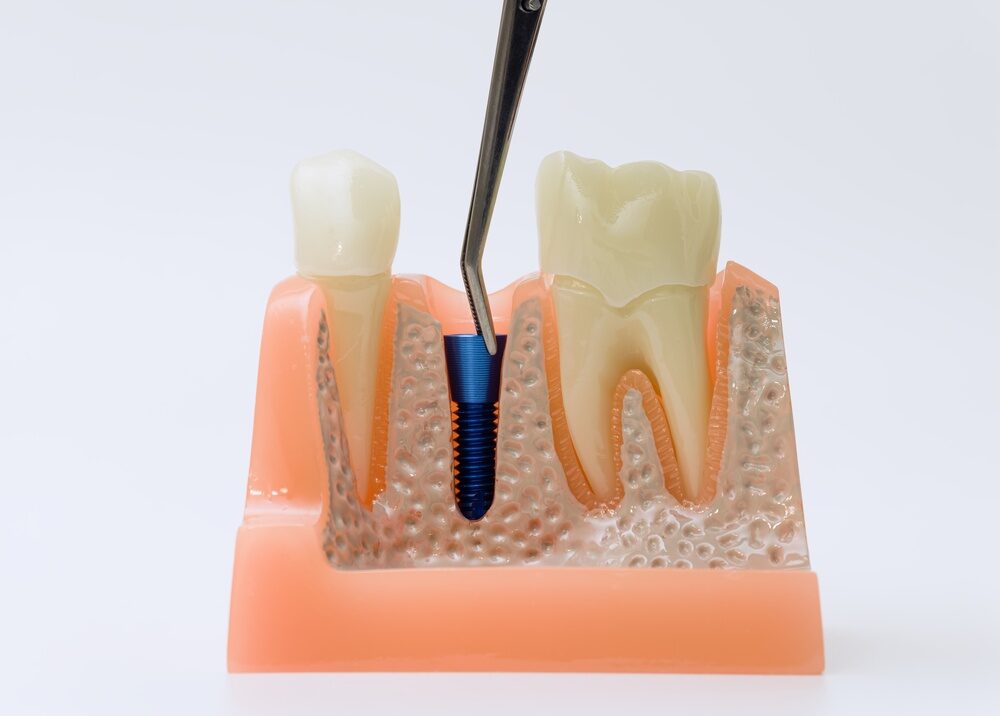
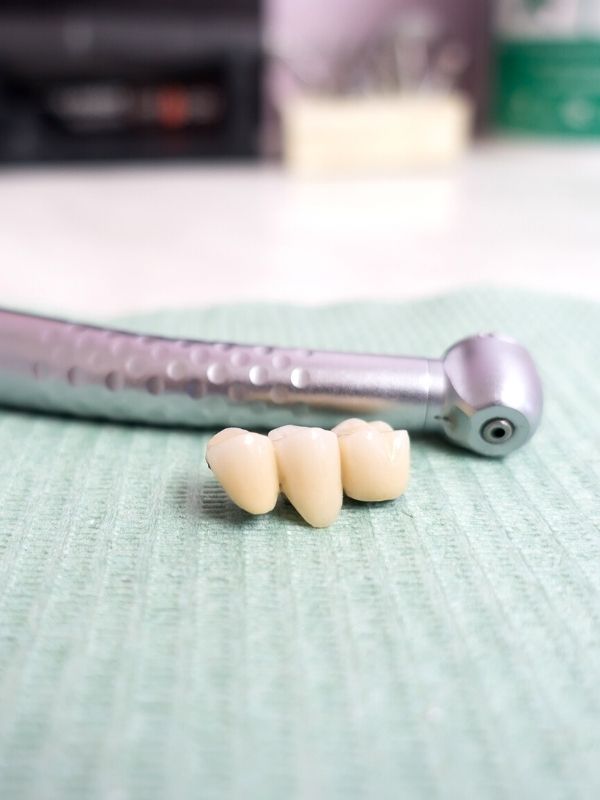
A bridge is held up by your own teeth. The dentist reshapes the tooth in front of the gap and the tooth behind it, then cements a single piece across all three positions. The two outer units are crowns. The middle unit floats above the gum where the missing tooth used to be.
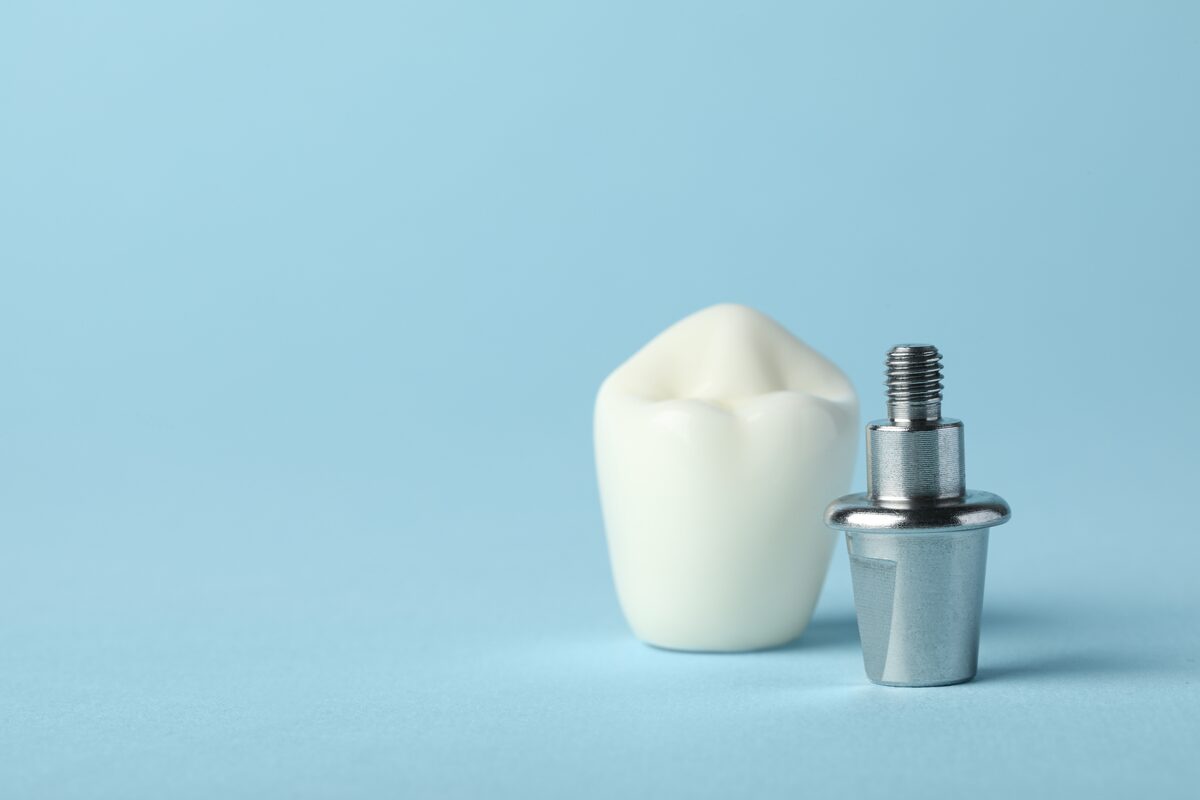
An implant is held up by your jawbone. A small titanium post goes into the bone in a short surgical procedure. Over the next few months the bone grows tight against it. Then a crown is attached on top. Nothing touches the teeth on either side. You can read more about how we handle replacing a missing tooth and what each path involves.
How Does a Dental Bridge Work?
A bridge is quick, and that is its main appeal. Two visits in most cases. The first visit is for shaping the neighboring teeth and taking the impression or scan. The second is for fitting and cementing the finished bridge. You wear a temporary in between.
The catch is what happens at that first visit. To hold crowns, the two teeth beside the gap have to be filed down. That enamel does not grow back. If those teeth are already crowned, or already have large fillings, you are not losing much. If they are untouched and healthy, a bridge asks a lot of them.
Bridges are still the right call in plenty of mouths. See our page on dental bridges for how they are made and fitted, and dental crowns for how the supporting units work.
How Does a Single Dental Implant Work?
An implant replaces the root first and the tooth second. The post goes into the bone, and then you wait while the bone takes hold of it. That wait is the trade-off of the approach. For most people it runs a few months. Once it is solid, the crown goes on.
Because the implant stands on its own, the teeth on either side stay exactly as they are. The bone at the site also keeps getting used, which matters more than most people expect. Bone that no longer carries a root slowly shrinks away, and a bridge does nothing to stop that.
Our post on what a single dental implant involves walks through the appointments one at a time, and how long a dental implant takes covers the timeline in more detail.
Which One Lasts Longer?
Neither is permanent. Both can last a very long time when they are looked after. The honest difference is in how they tend to fail.
What usually ends a bridge
The bridge itself rarely breaks. What fails is one of the teeth underneath it. Decay can start at the edge of a crown where it meets the gum, and because it is hidden under porcelain it is often found late. If one support tooth goes, the whole bridge comes off, and you are now solving a two tooth problem.
What usually ends an implant
The titanium post does not decay. What it can lose is the bone around it, through an infection in the gum tissue that behaves a lot like gum disease. That is preventable, and it is why Dr. Tummala will not place an implant until any active gum disease has been treated and the tissue is stable.
The practical read
An implant usually asks for more time and more patience up front and gives you a tooth that stands alone. A bridge gets you eating normally sooner and ties the result to two other teeth. Which trade you would rather make depends mostly on the condition of those two teeth.
What Does Each One Ask of the Teeth Next Door?
This is the question that settles it for a lot of people, and it is worth asking plainly at your appointment. Look at the two teeth beside the gap.
If they are sound, with no fillings and no cracks, an implant leaves them alone. There is no good reason to cut into healthy enamel if you do not have to.
If one or both already need crowns, the maths changes. A bridge can fix the gap and restore both teeth in the same piece of work. Nothing extra is being sacrificed, because those teeth were getting crowned either way.


How Long Does Each One Take?
A bridge is usually finished inside two to three weeks. Two appointments, a temporary in between, and then you are done.
An implant is measured in months, not weeks. The post is placed, the bone heals around it, and the crown follows. If a bone graft is needed first, add more healing time before the post can even go in. None of that time is spent in the chair. Most of it is spent waiting while your body does the work.
If you have an event coming up, say so. There are temporary options that keep the gap filled while an implant heals, and it is a lot easier to plan for that at the start.
So Which One Is Right for You?
There is no single answer, but there are patterns. Here is roughly how the conversation tends to go.
A bridge often makes sense when
The teeth on both sides already need crowns. You want the gap closed in weeks rather than months. Bone volume at the site is poor and you would rather not go through grafting. Or a medical reason makes a surgical procedure a bad idea right now.
An implant often makes sense when
The neighboring teeth are healthy and untouched. You want to protect the bone in that part of the jaw. The gap is at the back, where chewing forces are highest. Or you would rather clean around a single tooth with normal floss than thread under a bridge every day.
When neither is the answer
If more than one tooth is missing in the same area, the conversation widens to include partial dentures and implant supported options. More than one gap changes the arithmetic, and it is worth looking at the whole arch rather than one space at a time.
What Happens at the Consultation?
Dr. Tummala starts with an exam and imaging. The scan shows how much bone is at the site, where the nerve and sinus sit, and what shape the neighboring teeth are really in. That last part often surprises people, because a tooth can look fine and still have an old filling under the surface that changes the plan.
From there she will tell you which options are actually open to you, not just which ones exist. If you want to know in advance whether an implant is realistic, our post on what has to be right before an implant covers the main checks.
We see patients from Meyerland, Bellaire, Westbury, Willow Meadows and across southwest Houston. If you are looking for a dentist in Meyerland to talk through a missing tooth, call 713-723-7200.
What Is Recovery Like After Each One?
A bridge involves no surgery. The two appointments are done with local anesthesia, and most people go straight back to normal the same day. The gums around the new crowns can feel tender for a few days while they settle around the margins, and warm salt water rinses help.
An implant does involve a small surgical placement, so healing is a real part of the plan. Expect some swelling and soreness for two to three days, managed with over the counter pain relief in most cases. The longer healing happens quietly underneath, while bone grows against the titanium surface. You eat softer food on that side for a while, but you are not out of action.
Dr. Tummala will give you written aftercare instructions either way, and she will tell you what level of discomfort is normal so you know when something is worth a phone call.
How Do You Clean and Maintain Each One?
Maintenance is where the two really part ways, and it is worth knowing before you choose.
Looking after a bridge
You brush it like a normal tooth, but you cannot floss between the units, because the restoration is one solid piece. Cleaning under the middle unit needs a floss threader or a water flosser every day. Plaque that collects at the edge of a crown is the usual starting point for decay in the supporting teeth, and that decay is hidden under porcelain until it is advanced.
Looking after an implant
An implant crown flosses like a natural tooth. What it needs instead is attention to the gum around it. Implants do not decay, but the tissue around them can become inflamed, and once that inflammation reaches bone it is hard to reverse. Regular hygiene visits matter more after an implant, not less.
What Are the Risks of Each Option?
Both are routine procedures with good track records, and both carry risks worth naming plainly.
With a bridge, the main risk is to the two supporting teeth. Reshaping them removes enamel permanently, and in a small number of cases a tooth reacts to that work and later needs root canal treatment. Decay under a crown margin is the other common failure, and because the bridge is one piece, losing one support usually means remaking the whole restoration.
With an implant, the risks are surgical and biological. Placement near a nerve or a sinus has to be planned on a three dimensional scan, which is why that imaging is not optional. Some implants fail to integrate with the bone and have to be removed and redone, and smoking, uncontrolled diabetes and active gum disease all raise that chance.
Dr. Tummala will tell you which risks actually apply to your mouth rather than reciting the full list. Our page on dental crowns covers how the supporting restorations are made and what keeps them sound.
Which One Looks and Feels More Natural?
Modern porcelain handles appearance well in both cases, so the honest answer is that a skilled lab can make either one look right. The visible difference, if there is one, sits at the gum line.
A bridge has to bridge a gum ridge that has already started to shrink, so the middle unit sits against the gum rather than emerging from it. In the front of the mouth, a careful technician shapes it so this is hard to spot, but it is a design constraint.
An implant crown emerges from the gum the way a real tooth does, because there is a root underneath holding the tissue in shape. For function the difference is smaller than people expect. Both restore chewing. An implant tends to feel more like your own tooth because the force goes into bone rather than into the teeth on either side.
Frequently Asked Questions
Is a dental implant better than a bridge?
Neither is better in every mouth. An implant leaves the neighboring teeth untouched and keeps the bone at the site in use, which is why it is often the first recommendation when those teeth are healthy. A bridge is faster and can be the better answer when the teeth on either side already need crowns. The right choice depends on your bone, your gums and the condition of those two teeth.
Can I get an implant if the tooth came out years ago?
Often yes. Bone shrinks once a root is gone, so there is usually less of it than there would have been. A bone graft can rebuild the site. It adds healing time before the post goes in, but it is routine work and it opens the option back up for most people.
Does a bridge damage the teeth it attaches to?
It changes them permanently. Both teeth have to be reshaped to hold crowns, and that enamel does not come back. If those teeth already have large fillings or already need crowns, very little is being given up. If they are untouched, that is a real cost worth weighing.
How do you clean under a bridge?
You cannot floss between the units the normal way, because the bridge is one solid piece. You thread floss underneath the middle unit with a floss threader or use a water flosser. It takes a little longer every day, and skipping it is the most common reason a bridge fails early.
What if I just leave the gap alone?
Teeth move. The tooth above or below the gap tends to drift down or up into the space, and the teeth beside it lean in. That changes your bite and can make the gap harder to restore later. The bone at the site also shrinks over time. Leaving it is a decision, not a neutral option.