
Few dental words land as hard as root canal. Most of what people picture comes from stories told second hand, usually about treatment done decades ago.
Here is the short version of what it actually is. A root canal removes infected tissue from inside a tooth, cleans out the space it leaves behind, and seals it. The tooth stays in your mouth. That is the whole point of doing it. The alternative, once the inside of a tooth is infected, is usually losing the tooth.
This post goes through the appointment step by step, what you will feel, how long it takes and what the days afterward are like. If you are in pain right now, do not read to the end. Call 713-723-7200 or request an appointment.

What Is a Root Canal Actually Treating?
Inside every tooth, under the enamel and the dentin, there is a soft center. It holds the nerve and the blood supply that fed the tooth while it was forming. Dentists call it the pulp.
When bacteria reach the pulp, through deep decay, a crack, or an injury, it becomes infected. The pulp cannot heal itself, because it is sealed inside a hard shell with no room to swell. That is why the pain can be so sharp. Pressure has nowhere to go.
A root canal clears that infected tissue out. Our page on non surgical root canal treatment covers the approach we take, and if you want the plain definition first, read what a root canal is.
How Do You Know You Need One?
Sometimes it is obvious. More often it is not, and that is the problem.
Signs worth getting looked at include a toothache that wakes you up or lingers after you eat, pain that stays for a while after something hot or cold, tenderness when you bite down on one particular tooth, a tooth that has darkened compared to its neighbors, a small bump on the gum near a tooth root, or swelling in the face or jaw.
Now the part people do not expect. A tooth can need a root canal and not hurt at all. If the nerve has already died, the pain stops, but the infection does not. That is one reason regular exams and x-rays matter. Dr. Tummala finds these on film fairly often, in teeth the patient had no complaint about.
Swelling that is spreading, or a fever alongside tooth pain, is not a wait and see situation. That is emergency dental care.

What Happens Before the Procedure Starts?
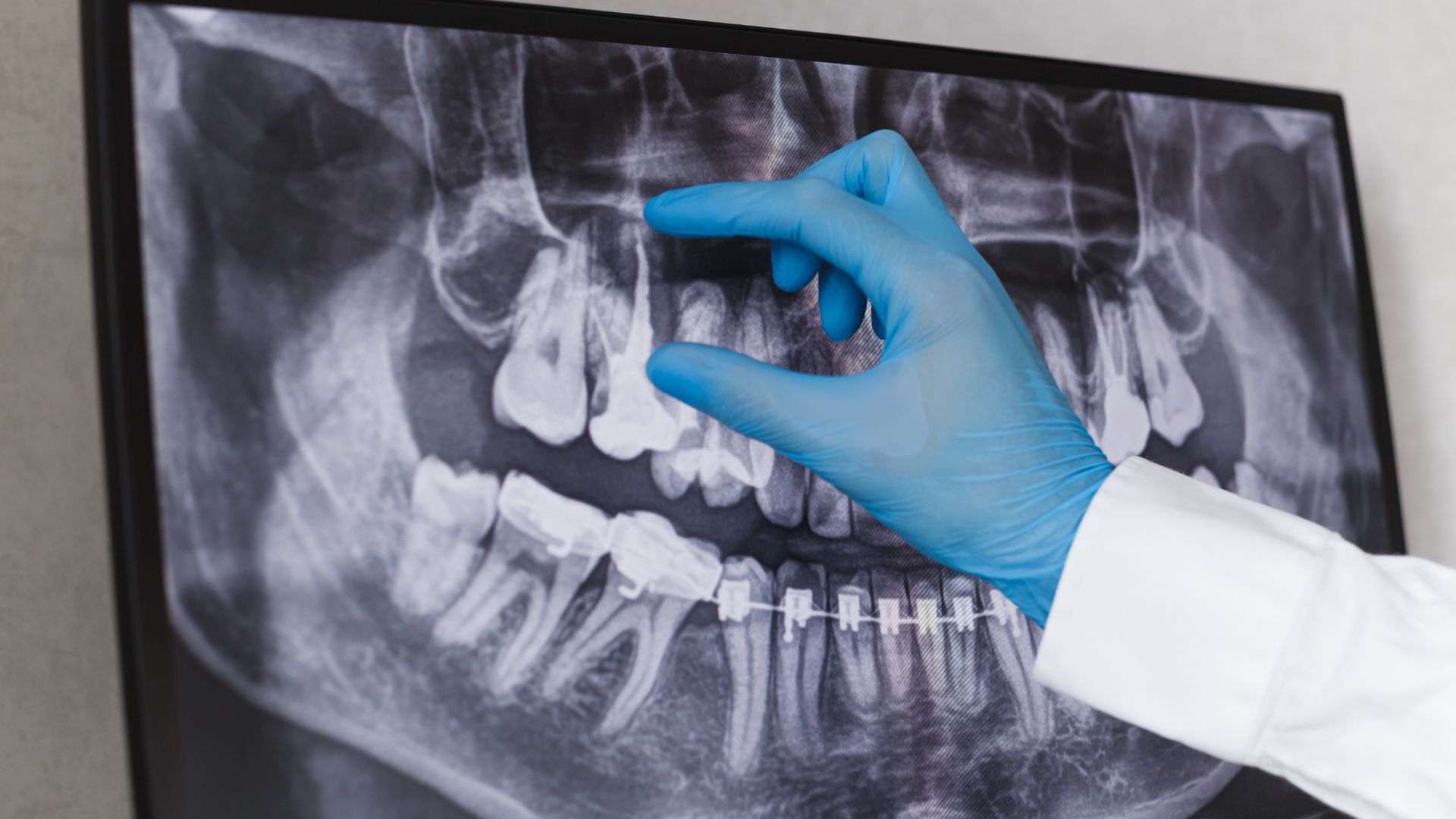
Dr. Tummala tests the tooth before she treats it. That usually means tapping on it, checking how it responds to cold, and taking an x-ray to see the root and the bone around its tip. Infection at the tip of a root shows up as a dark area on the film.
She will talk you through what she found and what she plans to do. If you are anxious about dental work, say so at this point rather than during. We offer nitrous oxide and oral sedation, and both are easier to arrange before the appointment than in the middle of it.
What Happens During a Root Canal, Step by Step
The appointment is more methodical than dramatic. Here is the order it runs in.
1. Numbing the tooth
Local anesthetic goes in first, and nothing else starts until the area is fully numb. If you can still feel sharpness when she tests it, she adds more. A tooth with a hot infection can be harder to numb, which is worth knowing in advance so you speak up rather than endure it.
2. Isolating the tooth
A thin sheet called a dental dam goes over the tooth. It keeps saliva out of the canal, which matters, because the whole point is to clean a space and keep it clean. It also means nothing being used ends up at the back of your throat.
3. Opening the tooth
A small opening is made through the top of the tooth, or through an existing filling, down into the pulp chamber. This is the part that sounds like a normal filling being done.
4. Cleaning and shaping the canals
The infected tissue is removed from each canal with very fine instruments, and the canals are rinsed repeatedly along the way. A front tooth usually has one canal. Back molars often have three or four, and they curve, which is why molars take longer. This step is most of the appointment.
5. Sealing the canals
Once the canals are clean, dry and shaped, they are filled with a rubber like material and sealed so bacteria cannot get back in. A temporary filling closes the opening.
6. Protecting the tooth afterward
A treated back tooth almost always needs a dental crown afterward. More on why below.

Does a Root Canal Hurt?
The honest answer is that the appointment itself is usually far less eventful than people brace for. With the tooth properly numb, most patients describe it as pressure and vibration rather than pain. A good number say it felt like having a long filling done.
The reputation comes from the pain that sends people in, not the treatment. An infected tooth can be genuinely awful. The root canal is what ends that.
We also use laser assisted root canal treatment in suitable cases, which helps disinfect the canal system. Whether it fits your tooth is something Dr. Tummala decides after she sees the x-ray.
How Long Does a Root Canal Take?
Most are done in a single visit of about sixty to ninety minutes. A front tooth with one straight canal can be quicker. A molar with four curved canals, or a tooth with a stubborn infection, can run longer or be split across two visits with medication left inside in between.
Dr. Tummala will give you a realistic estimate once she has seen the x-ray, before you commit to the appointment. If you need to arrange a ride or time away from work, ask then.
What Does Recovery Look Like?
Numbness wears off over two to four hours. Avoid chewing on that side until it does, because it is easy to bite your cheek without noticing.
For the next few days the tooth is often tender to bite on. That is the ligament around the root settling down, not the infection coming back, and over the counter pain relief is usually enough. It should improve a little each day.
Call us if pain gets worse rather than better after the first two or three days, if swelling appears, or if the temporary filling comes out. None of those are emergencies in most cases, but all of them are worth a phone call rather than a wait.

Why the Crown Afterward Really Matters
This is the step people skip, and it is the one that most often costs them the tooth.
A tooth that has had a root canal is more brittle than it was. It no longer has a blood supply inside, and material has been removed from the middle of it. A back tooth takes serious force every time you chew. Left under a temporary filling for months, it can crack, and a cracked root cannot be repaired.
A crown caps the tooth and holds it together. Book it when Dr. Tummala tells you to, not when the tooth starts to bother you again. If a tooth is lost because the crown never happened, you are back to deciding between a bridge and a dental implant, which is a longer road than the crown would have been.
What Happens If You Wait?
Infection inside a tooth does not resolve on its own. If the pain stops, it usually means the nerve has died, not that the problem has gone. From there the infection works down to the tip of the root and into the bone, which is how abscesses and facial swelling start.
Waiting also narrows your options. A tooth that could have been saved with a root canal in March can be beyond saving by the summer, and then the conversation is about tooth extraction and how to replace what is gone.
We treat patients from Meyerland, Bellaire, Westbury, Willow Meadows and across southwest Houston. If you are looking for a dentist in Meyerland for a tooth that has been bothering you, call 713-723-7200.
What Aftercare Does a Root Canal Need?
Most of the aftercare is simple and it matters more in the first forty eight hours.
Eat on the other side until the temporary filling has fully set and the tenderness has eased. Soft foods are easier for the first day or two. Soup, eggs, yogurt and pasta are all fine. Avoid anything hard or sticky on that tooth, because a temporary filling is not built to take it.
For soreness, over the counter pain relief is usually enough. Ibuprofen works well for this kind of inflammation if you can take it, and acetaminophen is the usual alternative. Follow the label, and tell us about any medications you already take so we can check for interactions.
Keep brushing and flossing the area normally. The gums around a treated tooth heal better when they are kept clean, and gentle brushing will not disturb the filling.
Are Antibiotics Part of the Treatment?
Usually not. A root canal works by physically removing the infected tissue, and antibiotics cannot reach inside a canal where there is no blood supply to carry them. Clearing the infection is what the procedure does.
Antibiotics come into it when the infection has spread beyond the tooth, for example with facial swelling, a fever, or signs the infection is tracking into surrounding tissue. In those cases Dr. Tummala may prescribe a course alongside treatment rather than instead of it.
What Is Actually Sealed Inside the Tooth?
Once the canals are cleaned and dried, they are filled with gutta percha, a rubber like material made from tree sap that has been used in dentistry for well over a century. It is warmed, pressed into the shaped canal and set with a sealer so there is no space left for bacteria to repopulate.
Above that, the access opening through the crown of the tooth is closed. If the tooth had a large cavity to begin with, there may be very little natural tooth structure left around the opening, which is part of why a crown is recommended afterward.
The nerve tissue is gone for good, so the tooth will not feel hot and cold any more. It still responds to pressure, because the ligament holding the root in the bone is untouched. That is why biting can feel tender for a few days while that ligament calms down.
Signs Something Is Not Healing the Way It Should
Normal healing gets a little better each day. Call us at 713-723-7200 if you see any of the following instead.
Pain that is increasing rather than easing after the first two or three days. Swelling of the gum, cheek or jaw that appears or grows. A fever. A bad taste that keeps coming back, which can mean the temporary seal has failed. The temporary filling coming out, or feeling noticeably lower when you bite. Sensitivity in the gums around the tooth that does not settle.
None of these are common, and most are easily dealt with when they are caught early. Waiting is what turns a small problem into an urgent one.
Frequently Asked Questions
How many visits does a root canal take?
Most are finished in one visit of roughly sixty to ninety minutes. A molar with several curved canals, or a tooth with a stubborn infection, is sometimes split across two visits with medication sealed inside in between. The crown that protects the tooth afterward is a separate appointment.
Can I drive myself home afterward?
Yes, if you had only local anesthetic. Your mouth will be numb for a few hours but nothing affects your ability to drive. If you choose oral sedation, you will need someone to drive you both ways, so arrange that when you book.
Is it better to just pull the tooth?
Keeping your own tooth is almost always the better outcome when it can be saved. Your natural root holds the bone in place and the bite stays as it is. Once a tooth comes out, the gap has to be filled with a bridge or an implant, and the bone at the site slowly shrinks. Extraction is the right answer when a tooth is cracked below the gum or too broken down to restore.
Why does my tooth still hurt a few days later?
Tenderness when you bite for several days is normal. The ligament that attaches the root to the bone has been irritated and takes time to settle. It should ease a little each day. Pain that is getting worse, or new swelling, is a reason to call us rather than wait it out.
Can a root canal fail?
It can, though it is not common. A canal that was hard to reach, a new crack, or decay that gets in under a leaking filling can all let bacteria back in. When that happens the tooth can often be retreated. Getting the crown placed on time is the single best thing you can do to stop it happening.