


A crown is what a dentist uses when a tooth has lost too much of itself to be repaired with a filling. It covers the whole tooth above the gum line and takes over the job the tooth can no longer do on its own, which is holding up under the force of chewing.
Dr. Tummala places crowns at our office on North Braeswood Boulevard in Meyerland, for patients across Bellaire, Westbury, Willow Meadows and the rest of southwest Houston. This page covers when a crown is the right answer, what the materials are, what the appointments involve, and how long one should last.
If you have a tooth that is cracked, worn, or has recently had a root canal, call 713-723-7200 or request an appointment.
Why a Tooth Needs a Crown
A filling replaces a small amount of missing tooth and leans on the healthy structure around it for strength. Once too much of that structure is gone, there is nothing left for a filling to hold onto, and it will keep working loose.
A crown works the other way around. Instead of filling a hole, it wraps the tooth. The force of your bite is carried by the crown and passed down through the root, rather than wedging what is left of the tooth apart.
That is why crowns come up after a large old filling fails, after a crack, after years of grinding wear, or after a root canal, when the inside of the tooth has been cleaned out and the walls are thinner than they were.

Signs You Might Need One
Most people do not arrive asking for a crown. They arrive because of something else.
- A tooth that aches when you bite down on it, but feels fine otherwise
- A visible crack, or a corner that has broken away
- An old filling that keeps coming loose
- A tooth worn noticeably shorter than the ones beside it
- Sensitivity to cold that lingers after the cold is gone
Any of these can turn out to need a crown. Some turn out to need nothing yet. The examination and an x-ray decide that, not the symptom on its own, which is why it is worth having looked at rather than guessed at.
What a Dental Crown Actually Is
A crown is a hollow cap shaped like a tooth. It fits over what remains of the natural tooth and meets the gum line.
Fitting one means the tooth is shaped down first, so the crown sits at the size of a normal tooth rather than bulking it out. A temporary crown, usually plastic or metal, protects the tooth while the permanent one is being made.
The permanent crown is made to match your bite and, where it shows, the shade of the teeth around it.
The Materials, and How to Choose
There is more than one material, and they trade off against each other differently.
All-ceramic and porcelain. The usual choice for teeth that show. These are matched to the shade of the teeth either side, which matters most at the front, and they are strong enough for everyday chewing.
Zirconia. Harder than porcelain and a common choice at the back, where the force is highest and appearance matters less.
Porcelain fused to metal. A metal core with a porcelain surface. Strong, though over the years the metal margin can start to show as a dark line at the gum.
Gold and metal alloys. Durable, and gentler on the opposing teeth than harder materials. Clearly metallic, so they are generally a back-tooth choice. If you have a metal allergy, say so before the material is chosen rather than after.
Which one suits you depends on where the tooth sits, how hard you grind, and how much the appearance matters to you. Dr. Tummala will tell you what she would use and why, rather than handing you a list and asking you to pick.
Crowns are one part of a wider area of care. Our post on what restorative dentistry is explains how crowns, fillings, bridges and implants fit together.
What Happens at Each Appointment
The first appointment
Decay and any failing filling material are removed and the tooth is shaped. An impression or a digital scan is taken so the crown can be made to fit your bite. The temporary goes on before you leave. You are numb for this part.
Between the two appointments
The temporary is held with a softer cement, because it has to come off again. Chew on the other side where you can and go easy on anything sticky. If it does come off, keep it and call us. It is not an emergency, but it should not be left, because the shaped tooth underneath can move.
The fitting appointment
The temporary comes off, the permanent crown is tried in, and the fit, the bite and the contact with the neighboring teeth are checked and adjusted before it is cemented. Most people are out faster than they were on the first visit.
Crowns After a Root Canal
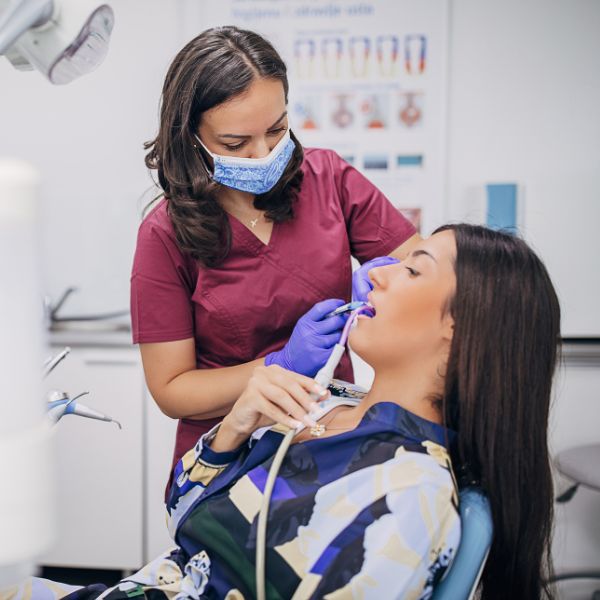
A tooth that has had a non-surgical root canal is more brittle than it was. The nerve and blood supply inside have been removed, and the tooth no longer gets the moisture that kept it slightly flexible.
Back teeth in particular are usually crowned afterward, because they take the most force. A root-treated molar left uncrowned can split, and when it splits the tooth often cannot be saved. That is a poor outcome after the work of saving it in the first place.
How Long a Crown Lasts, and What Shortens It
A well-fitted crown is a long-term restoration rather than a permanent one. It is still cemented to a natural tooth, and that tooth can still decay at the margin where the crown meets it.
What shortens the life of a crown is usually grinding at night, skipping cleanings so the gum around the margin stays inflamed, and using teeth to open packaging. What extends it is unremarkable: brushing, flossing around the margin, and having it checked at your regular visits.
If you grind your teeth, say so. A night guard protects the crown and the teeth around it, and it costs far less than replacing the work.
What a Crown Will Not Do
A crown restores a tooth. It does not treat whatever damaged the tooth. If the cause was grinding, the grinding carries on unless it is dealt with. If the cause was decay driven by a dry mouth, the dryness is still there.
A crown does not make a tooth immune either. The margin where it meets the tooth can still decay, and that decay is harder to spot because it sits under the edge.
And a crown is not a whitening treatment. Porcelain does not respond to whitening gel. If you are thinking about whitening, that is a conversation to have before the shade is chosen, not after.
Crown, Filling, or Something Else
Not every damaged tooth needs a crown.
If enough healthy tooth is left, a filling is less work. If the damage sits between the cusps rather than across the whole biting surface, an inlay or onlay can restore the tooth without covering all of it.
If the tooth cannot be saved, the conversation moves to replacing it, which usually means a bridge or a dental implant. A bridge uses the teeth either side as anchors. An implant replaces the root as well, so the neighboring teeth are left alone.
You will be told which of these applies to your tooth and why, with the reasoning, before anything is agreed.
Patients We See Across Meyerland and Southwest Houston
Our office is at 4455 N Braeswood Blvd, Suite 201, in Meyerland. Most patients come from Meyerland itself and from Bellaire, with others from Braeswood Place, Westbury and Willow Meadows.
Geography matters more for a crown than it does for a cleaning. A crown is two appointments a few weeks apart, plus a check afterward. A practice ten minutes from home is one you actually come back to for the second visit, rather than postponing it and living with a temporary crown for months.
If a tooth is cracked, aches under pressure, or has an old filling that will not stay put, it is worth having looked at before it breaks further. Call 713-723-7200 or request an appointment.
Frequently Asked Questions
Do I need a crown, or will a filling do?
It comes down to how much healthy tooth is left. A filling replaces a small amount of missing structure and relies on the tooth around it for strength. When too much of the tooth is gone, a filling has nothing solid to hold onto and the remaining walls can crack. A crown covers the whole tooth and takes the chewing force itself. Dr. Tummala will show you the X-ray and explain which one your tooth can support.
Can a cracked tooth be saved with a crown?
Often, yes. A crown wraps the tooth and holds it together, which stops a crack from spreading under chewing pressure. Whether it works depends on how deep the crack runs. Cracks that stay in the upper part of the tooth respond well. Ones that extend below the gum or into the root are harder, and sometimes the tooth cannot be saved. Getting it looked at early makes a real difference.
How long do crowns last?
Ten to fifteen years is a reasonable expectation, and many last longer than that. The crown itself does not decay, but the natural tooth underneath still can, right at the edge where the crown meets the gum. That margin is what we check at your regular visits.
Will my bite feel different afterward?
It may feel slightly unfamiliar for a day or two while you get used to the new surface. What it should not do is feel high, like that tooth hits first when you close. If it does, call us. That is a quick adjustment, and leaving it can make the tooth sore or the crown wear unevenly.
What should I do if my crown comes loose or falls off?
Keep the crown, do not try to glue it back yourself, and call us at 713-723-7200. Household glues are not safe in the mouth and can make the crown impossible to re-cement properly. Meanwhile the tooth underneath is exposed and often sensitive, so avoid chewing on that side. If a piece has broken off or the tooth is painful, that is worth treating as an urgent visit.
Will my crown match my other teeth?
Where the tooth shows, yes. The shade is matched to the teeth either side before the crown is made. Matching is easier on a back tooth than a front one, because front teeth are rarely a single flat color, and a good match there takes more care over the shade.
Can I have a crown on a front tooth?
Yes. Front teeth take less chewing force than molars, so an all-ceramic crown is usually the choice there for appearance. Dr. Tummala will talk through whether a crown is the right answer for a front tooth or whether something less involved would do.
Should I get a crown or a veneer?
They do different jobs. A veneer is a thin facing bonded to the front of a tooth and it suits appearance problems on a tooth that is otherwise sound. A crown covers the whole tooth and is for a tooth that has lost structure and needs the strength back. If the tooth is cracked or heavily filled, a veneer is not the answer.