
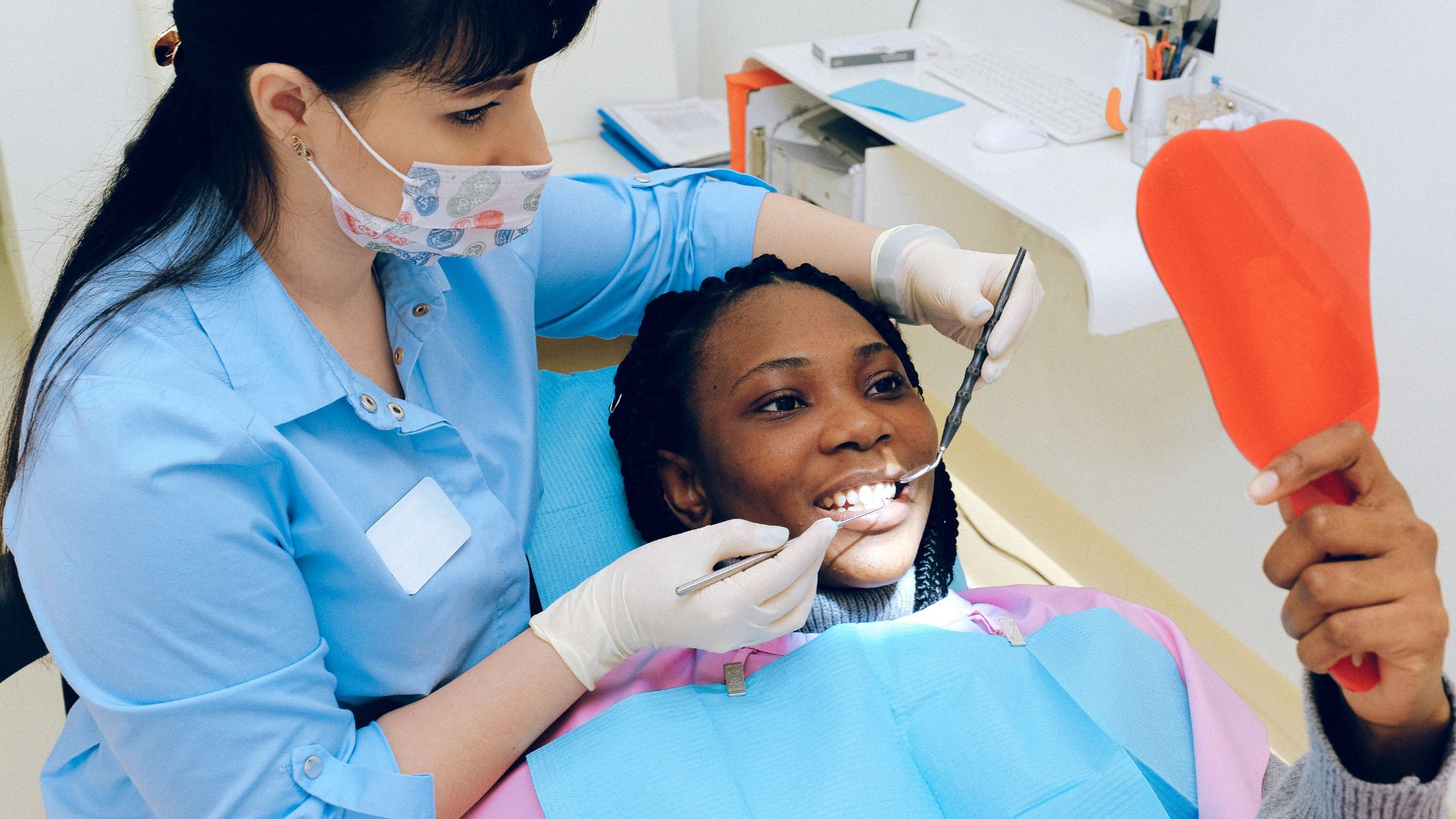
Dental prophylaxis is the clinical name for a routine professional teeth cleaning. It is a preventive dental procedure where a dentist or hygienist removes plaque and tartar from your teeth, above and just below the gum line, then polishes them. The word prophylaxis means prevention. The goal is to keep healthy gums healthy and catch small problems early.
At Meyerland Family Dentistry, a prophylaxis is part of the regular checkup most patients book twice a year. If you saw the word on a treatment plan and wondered what it meant, that is all it is.
Not sure whether a routine cleaning is still enough for your gums? Read regular cleaning or deep cleaning, and how to tell which one you need for what the pocket measurements mean.

What Happens During a Dental Prophylaxis?
A prophylaxis visit usually follows the same order:
- A look at your gums. Your hygienist checks the gum line and measures the small space between each tooth and the gum. Healthy readings tell us a routine cleaning is the right visit for you.
- Scaling. Plaque and hardened tartar, also called calculus, come off with hand instruments or an ultrasonic scaler. Once tartar sets, brushing at home cannot remove it.
- Polishing. A gritty paste smooths the tooth surface and lifts surface stains from coffee, tea and food.
- Flossing and a rinse. This clears anything loosened between the teeth.
- An exam with Dr. Tummala. She looks for cavities, worn fillings, signs of grinding and changes in the gums, and talks you through anything she finds.
What Are the Benefits of a Dental Prophylaxis?
- Plaque and tartar removal. Even with good brushing and flossing, plaque collects where a brush cannot reach. Left there, it hardens into tartar and irritates the gums. Removing it is the main way a prophylaxis helps prevent periodontal disease.
- Earlier answers. A cleaning is when gum problems, cavities and grinding wear are usually spotted, while they are still small. Our posts on why gum health matters and why regular checkups are worth keeping explain what we are looking for.
- Fresher breath. Bacteria in plaque, especially below the gum line, are a common cause of bad breath. Clearing them out often helps.
- A cleaner looking smile. Polishing removes surface stains. It is not whitening, and if whitening is on your mind, cavities have to be dealt with first.
How Often Do You Need a Dental Prophylaxis?
For most patients with healthy gums, twice a year. Patients who have been treated for periodontal disease usually come back every three to four months instead, and that visit is a different appointment called periodontal maintenance.
How often you personally need to come in depends on your gum health, your history and your habits. We break that down in how often you need a dental checkup in Houston.
Prophylaxis or Deep Cleaning: What Is the Difference?
A prophylaxis is for gums that are healthy or have mild gingivitis, the early stage of gum disease. A deep cleaning, called scaling and root planing, is treatment for periodontitis, where pockets have formed below the gum line that a routine cleaning cannot reach.
- Prophylaxis: preventive, works at and just below the gum line, usually done in one visit.
- Deep cleaning: treatment, cleans down the root surface inside the pockets, and sometimes takes more than one visit.
Gingivitis can usually be reversed with regular cleanings and good home care. Periodontitis cannot be undone, but it can be controlled. If your measurements show deeper pockets, the next step is a deep teeth cleaning in Meyerland, and Dr. Tummala also offers laser gum disease treatment.
Is Antibiotic Prophylaxis the Same Thing?
No. You may also see the term antibiotic prophylaxis. That means an antibiotic taken before certain dental procedures by a small group of patients, such as some people with specific heart conditions, to lower the risk of infective endocarditis, an infection of the heart lining. Current guidance from the American Heart Association and the American Dental Association limits it to those higher risk patients. Most people, including most with joint replacements, do not need it.
If you have a heart condition, a joint replacement or another medical reason to ask, tell us when you book. Dr. Tummala will review your health history before your visit, and your physician may be part of that decision.
Schedule a Teeth Cleaning in Meyerland
If what you are after is the routine appointment itself, our teeth cleaning in Houston page covers the visit in more detail. You can request an appointment online or call 713-723-7200. We see patients from Meyerland, Bellaire and across southwest Houston.
If you wake with a sore jaw or a headache in your temples, mention it at your cleaning. Night time grinding wears enamel down long before anyone notices it. And if other words on your treatment plan need explaining, our dental dictionary covers them in plain English.
Frequently Asked Questions
What does prophylaxis actually mean?
It is simply the clinical word for a preventive cleaning, the one most people book every six months. Prophylaxis means preventing rather than treating, which is exactly the point: it is done on healthy gums to stop problems starting. If you see it on a treatment plan or an insurance statement, that is all it refers to.
Is that the same as the cleaning I book every six months?
Yes. The routine cleaning appointment and a prophylaxis are the same thing described in different words, one everyday and one clinical. Our teeth cleaning page walks through what actually happens at the appointment.
What is included in an oral prophylaxis?
An oral prophylaxis, the same thing as a dental prophylaxis, includes a check of your gums, scaling to remove plaque and tartar, polishing, flossing and an exam with the dentist. Most visits take under an hour. If the gum measurements show deeper pockets, we will explain why a different cleaning is needed before going further.
Why has a deep cleaning been recommended instead?
Because measurements showed pockets deeper than a routine cleaning can properly reach. Healthy gums sit snugly against the tooth. When disease develops, the attachment pulls away and forms a pocket that traps bacteria below where any brush or standard clean can get. We measure those depths and take X-rays, and we will show you the numbers rather than just telling you the answer.
Can a regular cleaning clear up gum disease?
No, and it is important not to expect it to. A routine cleaning is designed to keep healthy gums healthy. Once there is established disease with pocketing and bone loss, it cannot reach the surfaces where the problem lives, and repeating it simply lets the disease progress quietly. Our gum disease treatment page sets out what actually addresses it.